Beste categorieën voor Meubels
De best presterende Meubels productcategorieën voor je webshop, gerangschikt op vraag, marges en groeipotentieel.
Beste Meubels categorieën om online te verkopen
Gerangschikt op marktvraag, winstmarges en groeimomentum
- 1
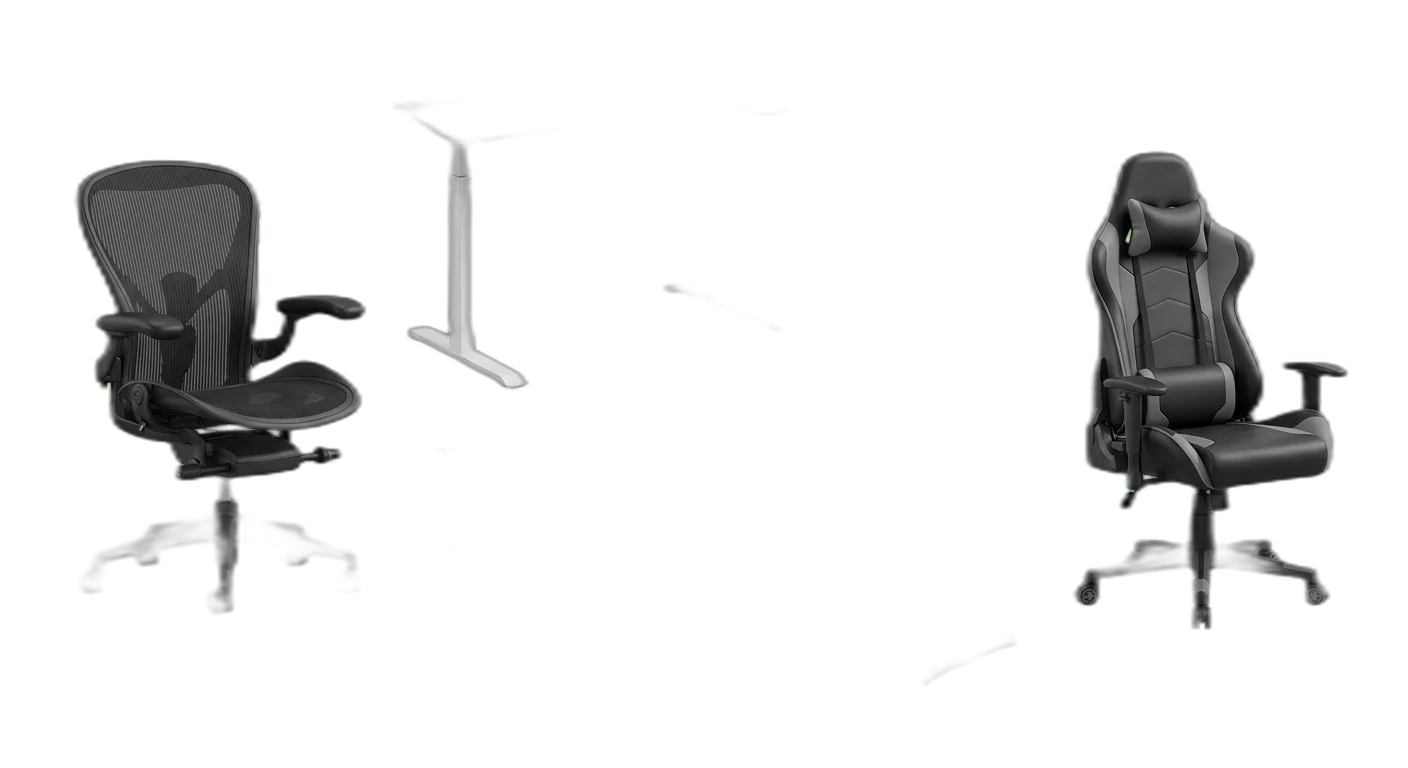
Bureaustoelen & Bureaus
Thuiskantoor
Thuiswerken heeft thuiskantoormeubelen tot een structurele groeicategorie gemaakt. Ergonomische stoelen zijn blijvend populair, met gemiddelde orderwaarden van 300-800 euro. Sta-bureaus zijn de snelst groeiende subcategorie. Het thuiskantoorsegment is een blijvend en flink deel van de meubel-ecommerce geworden, geen tijdelijke pandemiepiek.
Vraag: HoogConcurrentie: GemiddeldMarge: HoogStijgendVoorbeeldproductenErgonomische bureaustoelenSta-bureausL-vormige computerbureausGamingstoelenPro tipVoeg een ergonomische functies-checklist toe (lendensteun, armleunverstelling, kantelmechanisme) aan alle stoelvermeldingen. Bureaustoelkopers vergelijken specifieke functies, dus een duidelijke checklist helpt ze sneller beslissen.
- 2
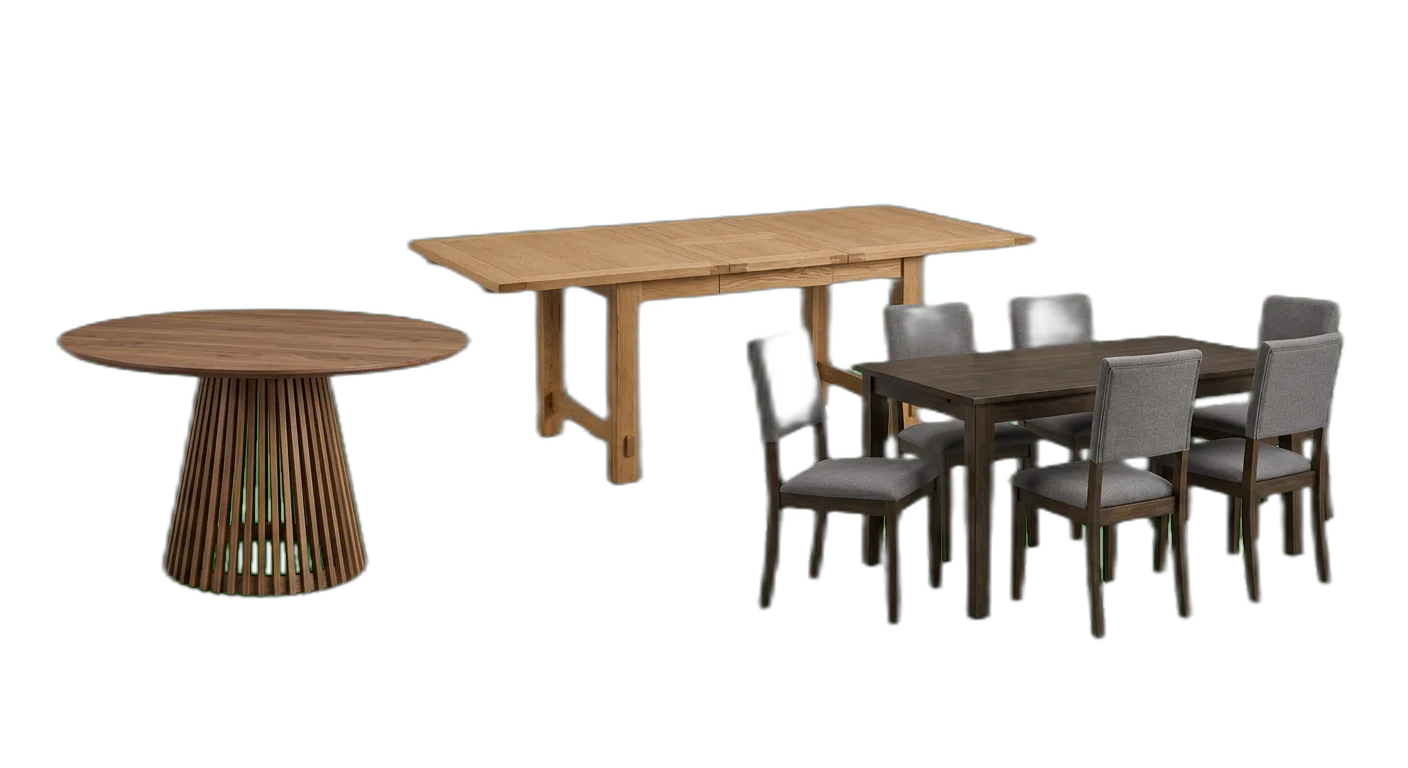
Eettafels & Sets
Eetkamer > Eettafels
Eettafels hebben hoge gemiddelde orderwaarden en sterk upsell-potentieel via bijpassende stoelen, bankjes en opbergruimte. Uitschuifbare tafels zijn de snelst groeiende subcategorie omdat klanten flexibele meubels zoeken voor kleinere woonruimtes. De categorie heeft het hele jaar door consistente vraag, met pieken tijdens het verhuisseizoen en de feestdagen.
Vraag: HoogConcurrentie: GemiddeldMarge: HoogStijgendVoorbeeldproductenUitschuifbare eettafelsRonde eettafelsEetsets met stoelenBartafelsPro tipToon zowel ingeklapte als uitgeklapte afmetingen voor uitschuifbare tafels, met een advies voor de kamergrootte. 'Past in een eetkamer van 3x4m' converteert beter dan afmetingen alleen.
- 3
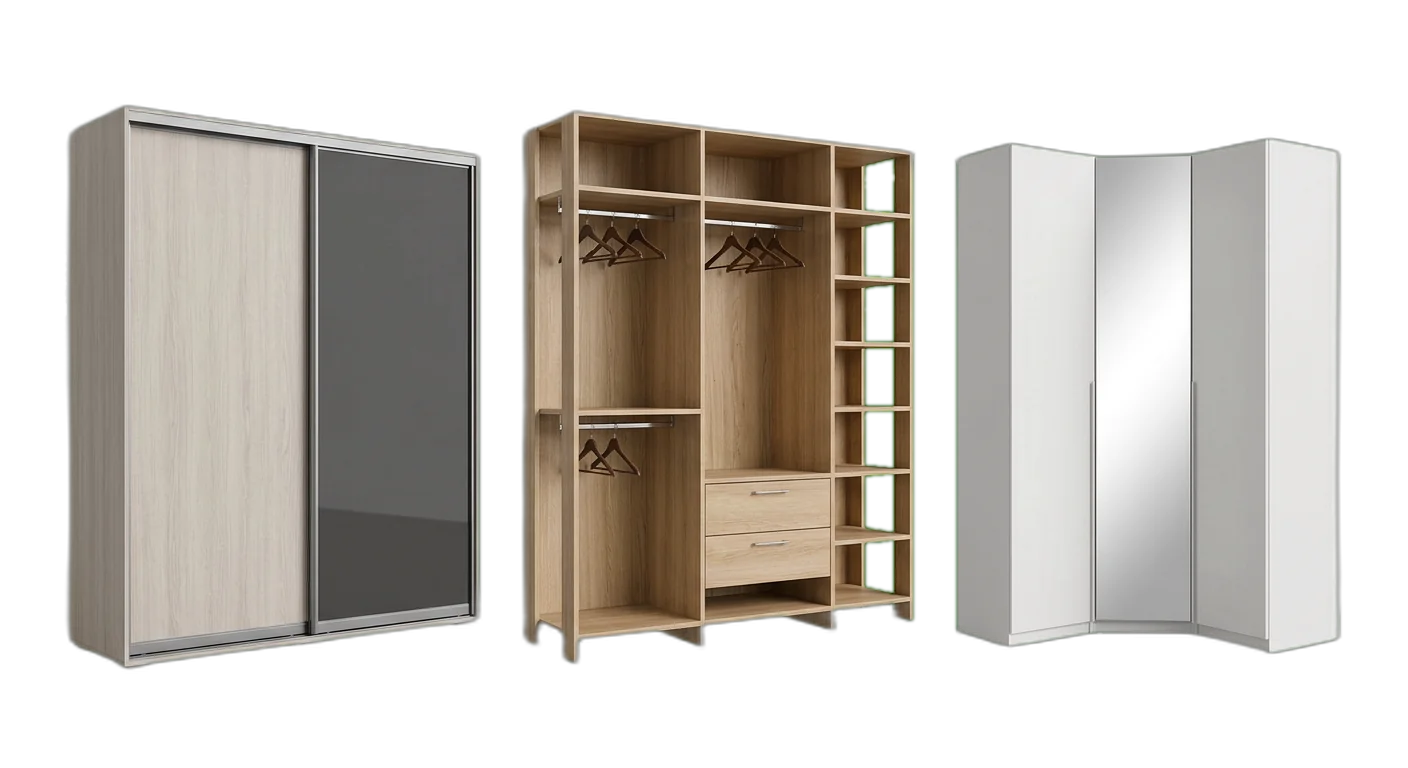
Garderobekasten & Inbouwsystemen
Slaapkamer > Slaapkameropberging > Garderobekasten
Garderobekasten zijn de grootste slaapkameropbergaankoop, met prijzen van 200 euro voor basismodellen tot meer dan 2.000 euro voor premium schuifdeursystemen. De categorie profiteert van de groeiende populariteit van modulaire kastsystemen op maat. Een gedetailleerde beschrijving van de interne indeling is cruciaal voor conversie.
Vraag: GroeiendConcurrentie: GemiddeldMarge: HoogStijgendVoorbeeldproductenSchuifdeur garderobekastenInloopkastsystemenSpiegelkastenHoekkastenPro tipVoeg een visueel diagram toe van de interne indeling (hangrails, planken, lades). Klanten kunnen de kast online niet openen, en de interne configuratie is de belangrijkste beslissingsfactor na de afmetingen.
- 4
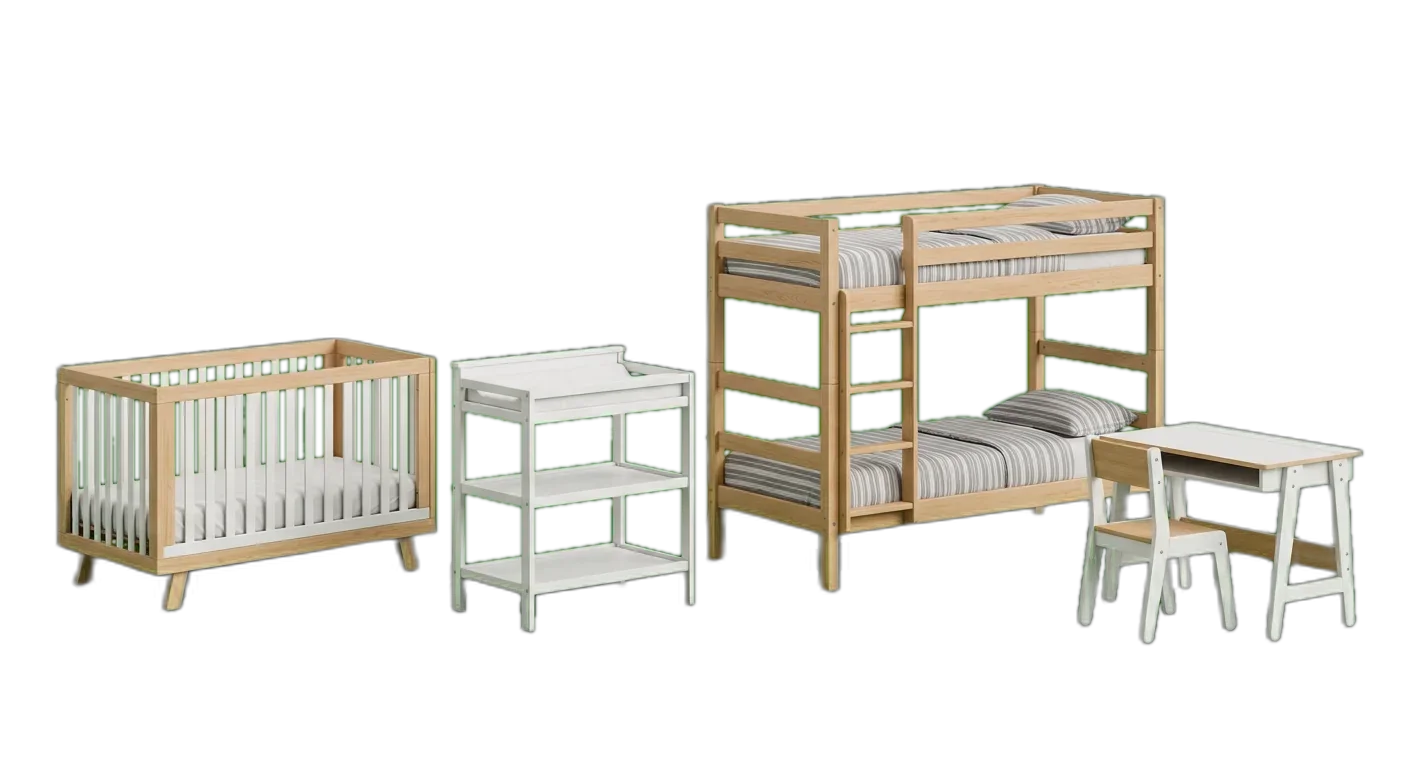
Kinder- & Babykamermeubelen
Kinder- & Babykamer
Baby- en kindermeubelen worden gedreven door levensgebeurtenissen (aanstaande ouders, kinderen die meubelen ontgroeien) die urgente aankopen creëren. Ouders betalen graag extra voor veiligheidsgecertificeerde producten. De categorie profiteert van sterke mond-tot-mondreclame en hoge merkloyaliteit.
Vraag: GemiddeldConcurrentie: LaagMarge: HoogStijgendVoorbeeldproductenLedikanten en wiegenKinderstapelbeddenKinderbureausCommodePro tipToon veiligheidscertificeringen (EN 716, ASTM, JPMA) goed zichtbaar. Ouders filteren eerst op certificering, en ontbrekende veiligheidsdata diskwalificeert een product direct.
- 5
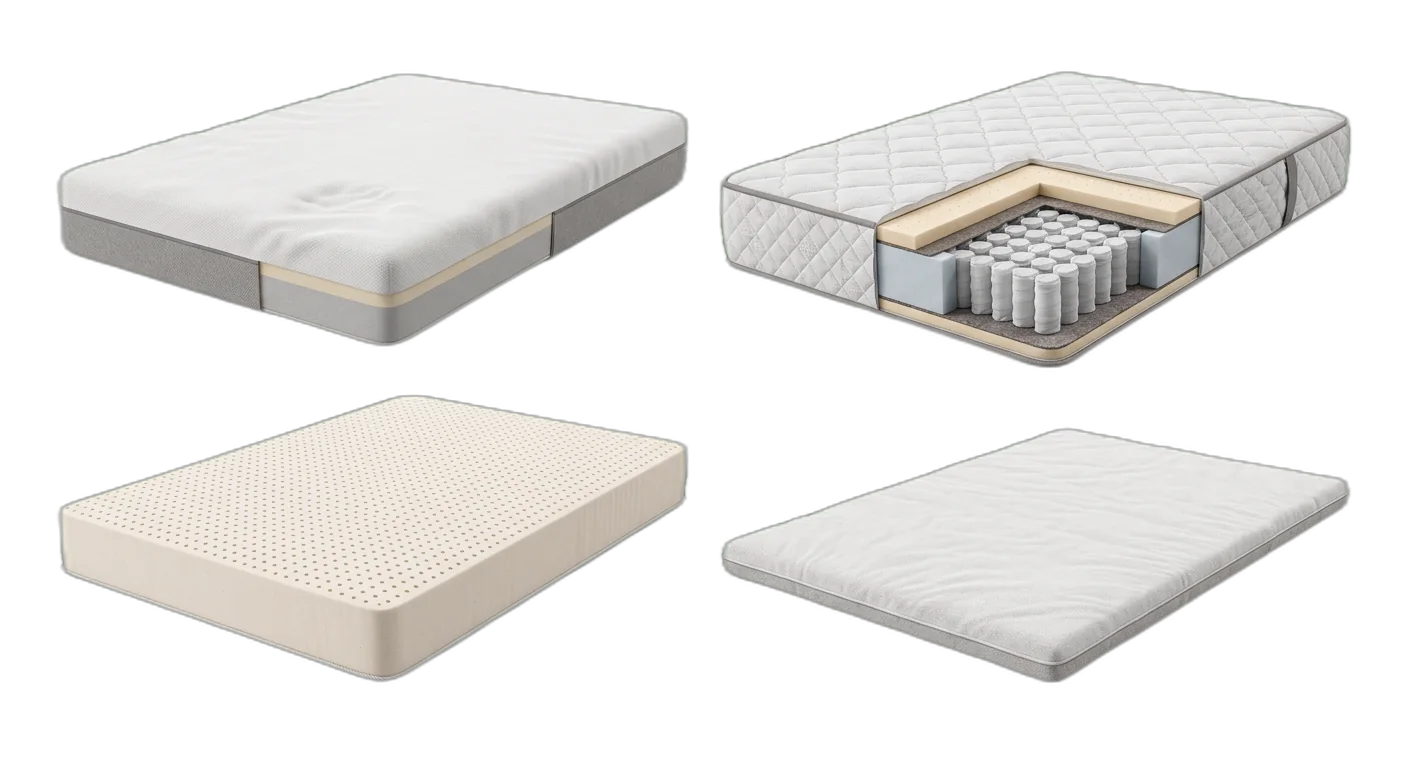
Matrassen
Slaapkamer > Matrassen
De online matrassenmarkt is uitgegroeid tot een miljardencategorie, gedreven door bed-in-a-box merken die online matrassenaankopen mainstream hebben gemaakt. Klanten besteden maanden aan onderzoek voordat ze kopen. Proefperiodes en retourbeleid zijn belangrijke onderscheidende factoren. De categorie heeft hoge marges en sterk upsell-potentieel voor kussens en beddengoed.
Vraag: GroeiendConcurrentie: LaagMarge: GemiddeldStijgendVoorbeeldproductenMemory foam matrassenHybride veermatrassenLatexmatrassenMatrassen toppersPro tipVoeg een stevigheidsvergelijking toe over je matrasassortiment. Klanten vinden het lastig om stevigheid tussen merken te vergelijken, en een vaste schaal helpt ze een keuze te maken.
- 6
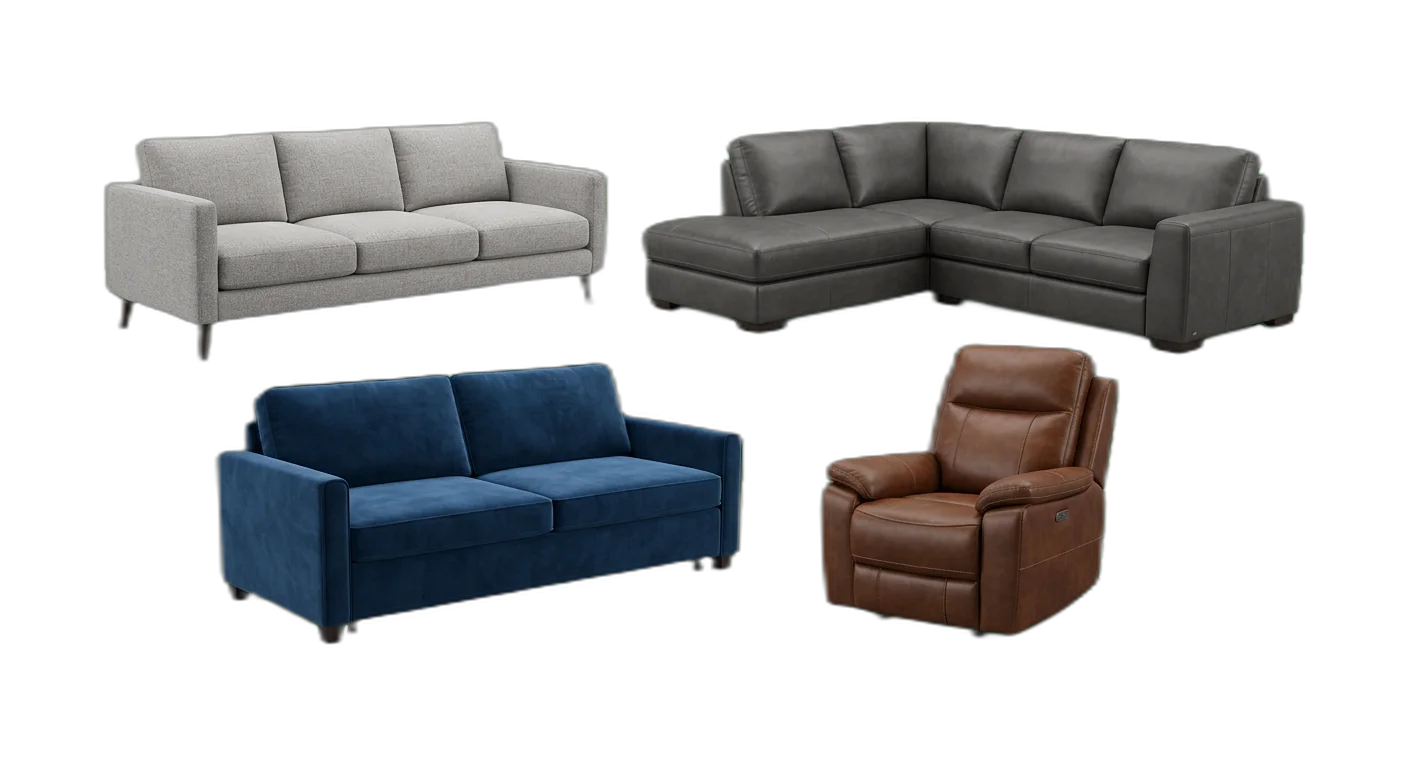
Banken & Hoekbanken
Woonkamer > Banken & Hoekbanken
Banken zijn de duurste individuele meubelaankoop voor de meeste huishoudens, met gemiddelde orderwaarden van 500 tot meer dan 3.000 euro. Ze zijn goed voor het grootste deel van de woonkameromzet online. Klanten doen uitgebreid onderzoek voordat ze kopen, dus gedetailleerde productpagina's met meerdere afbeeldingen, afmetingen en materiaalspecificaties zijn essentieel voor conversie.
Vraag: HoogConcurrentie: HoogMarge: HoogStabielVoorbeeldproducten3-zitsbankenHoekbankenSlaapbankenRelaxfauteuilsPro tipVoeg meerdere sfeerbeelden toe die de bank in een echte kamer tonen met zichtbare afmetingen. Dit is de belangrijkste factor bij het verminderen van bankretouren, meteen ook de duurste retour om af te handelen vanwege het transport.
- 7
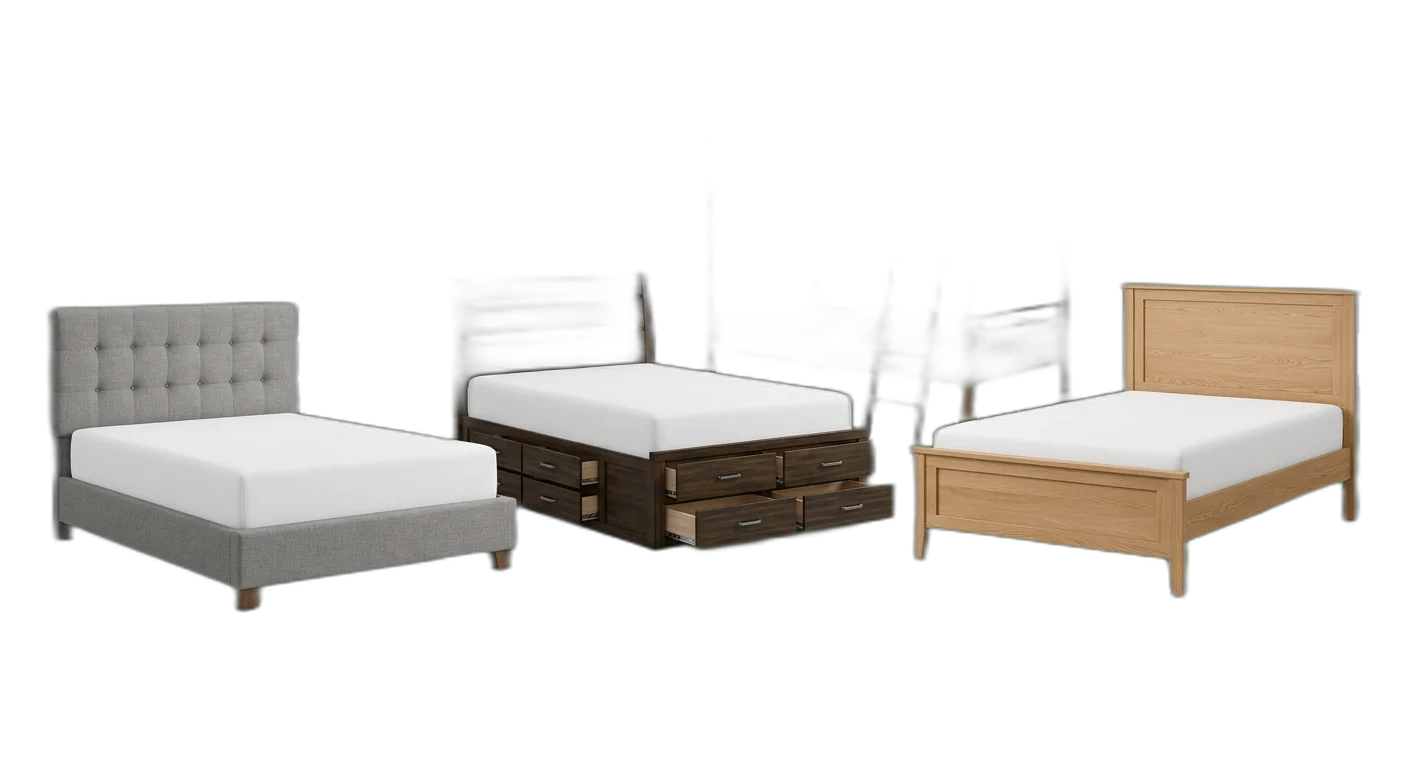
Bedden & Bedframes
Slaapkamer > Bedden & Frames
Bedden zijn de op een na duurste meubelaankoop na banken. De bed-in-a-box trend heeft het online kopen van bedden mainstream gemaakt, doordat het bezorgprobleem is opgelost dat matrassen eerst aan de fysieke winkel bond. Duidelijke maatstandaarden (eenpersoons, tweepersoons, kingsize) maken online aankopen eenvoudig voor klanten.
Vraag: HoogConcurrentie: HoogMarge: GemiddeldStabielVoorbeeldproductenKingsize bedframesGestoffeerde beddenStapelbeddenOpbergbedden met ladesPro tipVermeld altijd welk matrasformaat in het frame past met exacte afmetingen. Bedmaataanduidingen verschillen per land (UK King is niet EU King), en maatafwijking is de meest voorkomende retourredeneden.
- 8
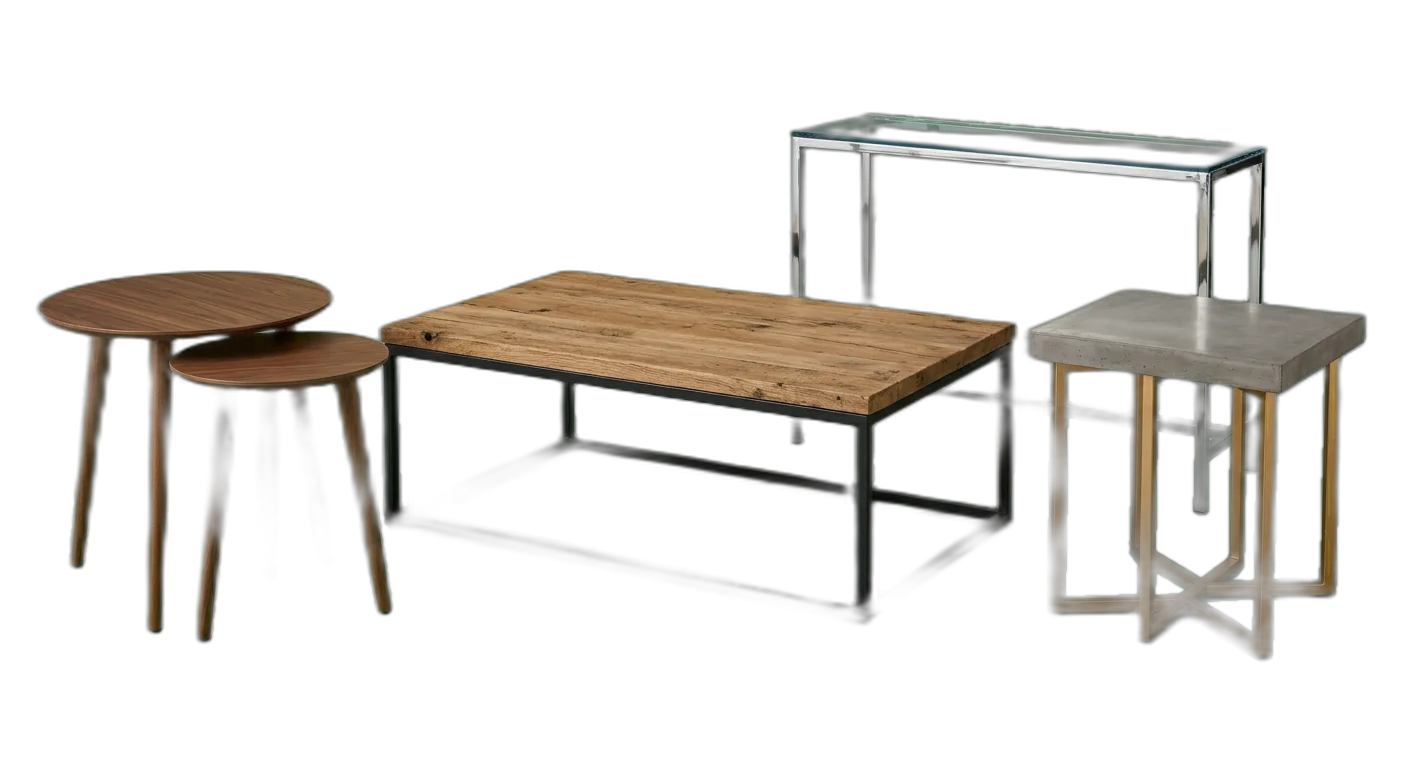
Salontafels & Bijzettafels
Woonkamer > Salontafels & Bijzettafels
Salontafels en bijzettafels zijn de meest gekochte woonkameraccessoires, met toegankelijke prijzen die hoge conversiepercentages opleveren. Ze worden vaak als impulsaankoop toegevoegd bij een bank. De categorie bestrijkt een breed stijlbereik en leent zich goed voor sterke visuele marketing.
Vraag: HoogConcurrentie: HoogMarge: GemiddeldStabielVoorbeeldproductenSalontafelsNesttafelsetsWandtafelsBijzettafelsPro tipToon salontafels gestyled met banken in je productfoto's. Klanten die een bank kopen richten een hele kamer in, dus een bijpassende salontafel in beeld maakt van een aankoop er twee.
- 9
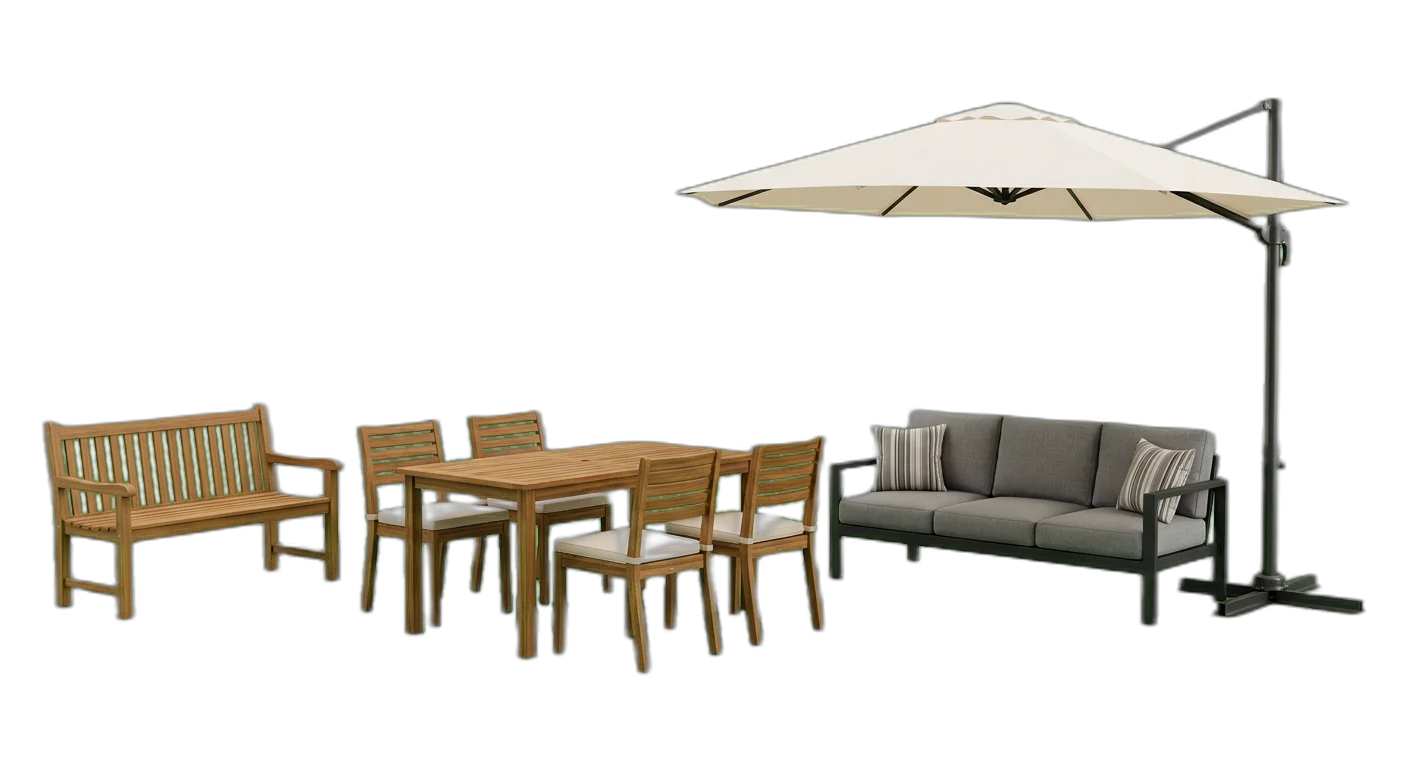
Tuinmeubelen
Tuinmeubelen
Tuinmeubelen zijn een van de snelst groeiende meubelsegmenten, gedreven door de populariteit van buiten leven. Gemiddelde orderwaarden voor terras-eetsets liggen hoger dan voor binneneetssets. De categorie heeft sterke seizoensvraag met premium marges. Weerbestendige materialen zoals teak en aluminium brengen aanzienlijk hogere prijzen op.
Vraag: GemiddeldConcurrentie: GemiddeldMarge: HoogSeizoensgebondenVoorbeeldproductenTerras-eetsetsBuiten loungebankenTuinbankenParasolsPro tipVermeld weerbestendigheidscijfers en onderhoudsinstructies goed zichtbaar. De meeste tuinmeubelretouren gebeuren omdat klanten achteraf ontdekken dat hun aankoop niet geschikt is voor hun klimaat.
- 10
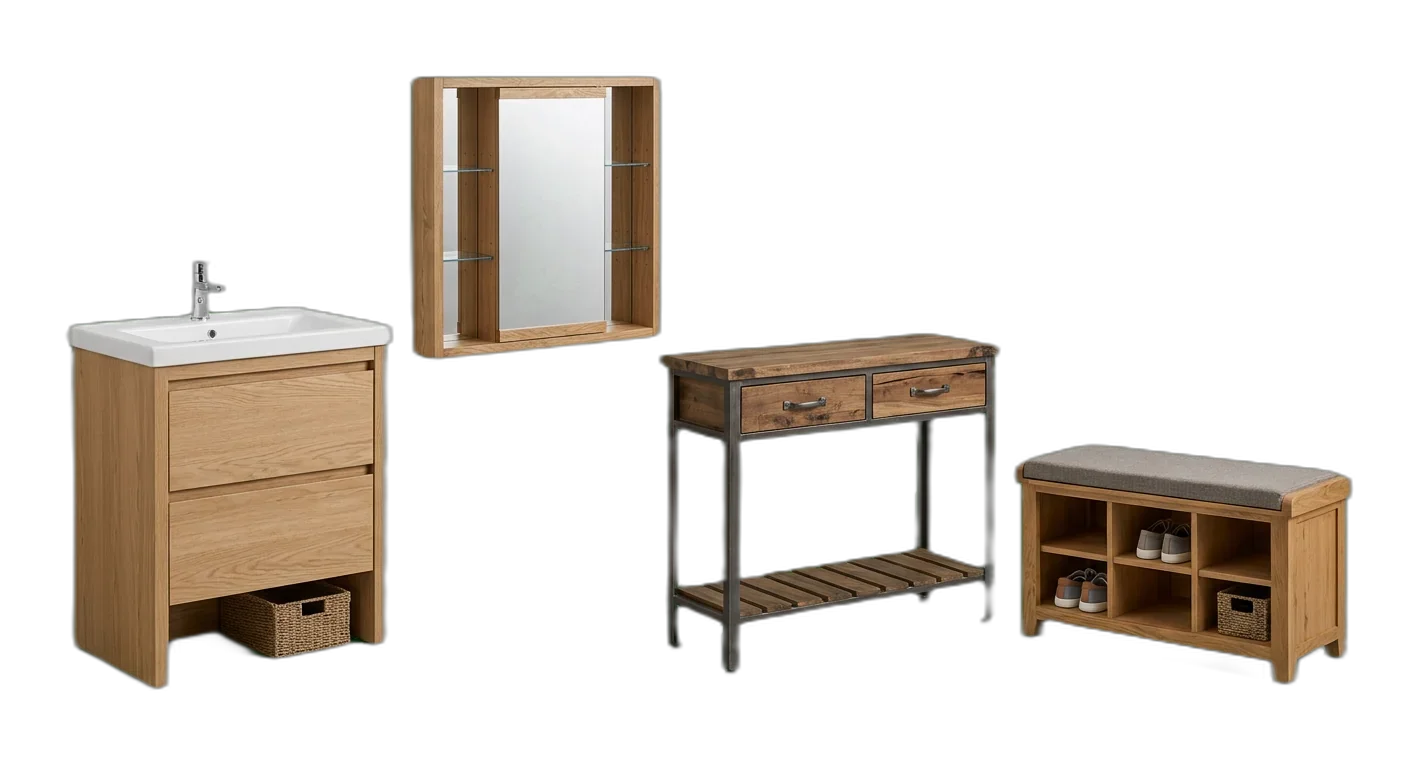
Badkamer- & Halmeubelen
Badkamermeubelen
Badkamermeubelen en halmeubelen zijn groeiende niches nu huiseigenaren investeren in ruimtes die vroeger onderbelicht waren. Wasmeubelen hebben een hoge bijverkooprate voor spiegels en accessoires. Halmeubelen profiteren van de thuisorganisatietrend. Beide categorieën hebben minder concurrentie dan woonkamer- en slaapkamermeubelen.
Vraag: GemiddeldConcurrentie: GemiddeldMarge: GemiddeldStabielVoorbeeldproductenWasmeubelen met wastafelSpiegelkastenHaltafelsSchoenenkastenPro tipVermeld voor badkamermeubelen altijd waterbestendigheid en bevestigingstype (wandmontage vs vrijstaand). Dit zijn de twee belangrijkste filters voor badkamermeubelkopers.
Categorieprestaties in één oogopslag
Vergelijk vraag, concurrentie, marges en groei voor alle aanbevolen categorieën
Bureaustoelen & BureausEettafels & SetsGarderobekasten & InbouwsystemenKinder- & BabykamermeubelenMatrassenBanken & HoekbankenBedden & BedframesSalontafels & BijzettafelsTuinmeubelenBadkamer- & HalmeubelenAanbevolen Meubels categoriestructuur
De volledige categorieboom met subcategorieën voor elke aanbevolen hoofdcategorie
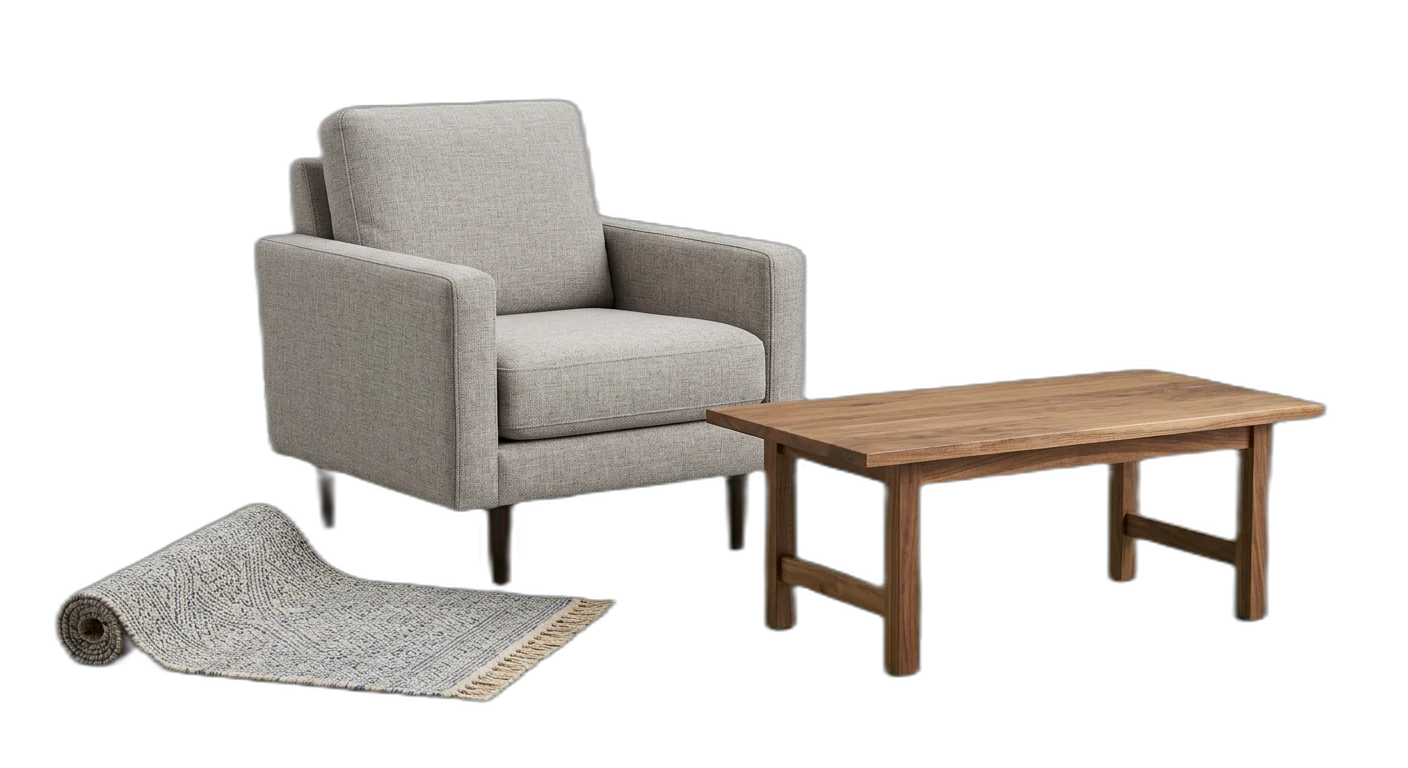
Woonkamer
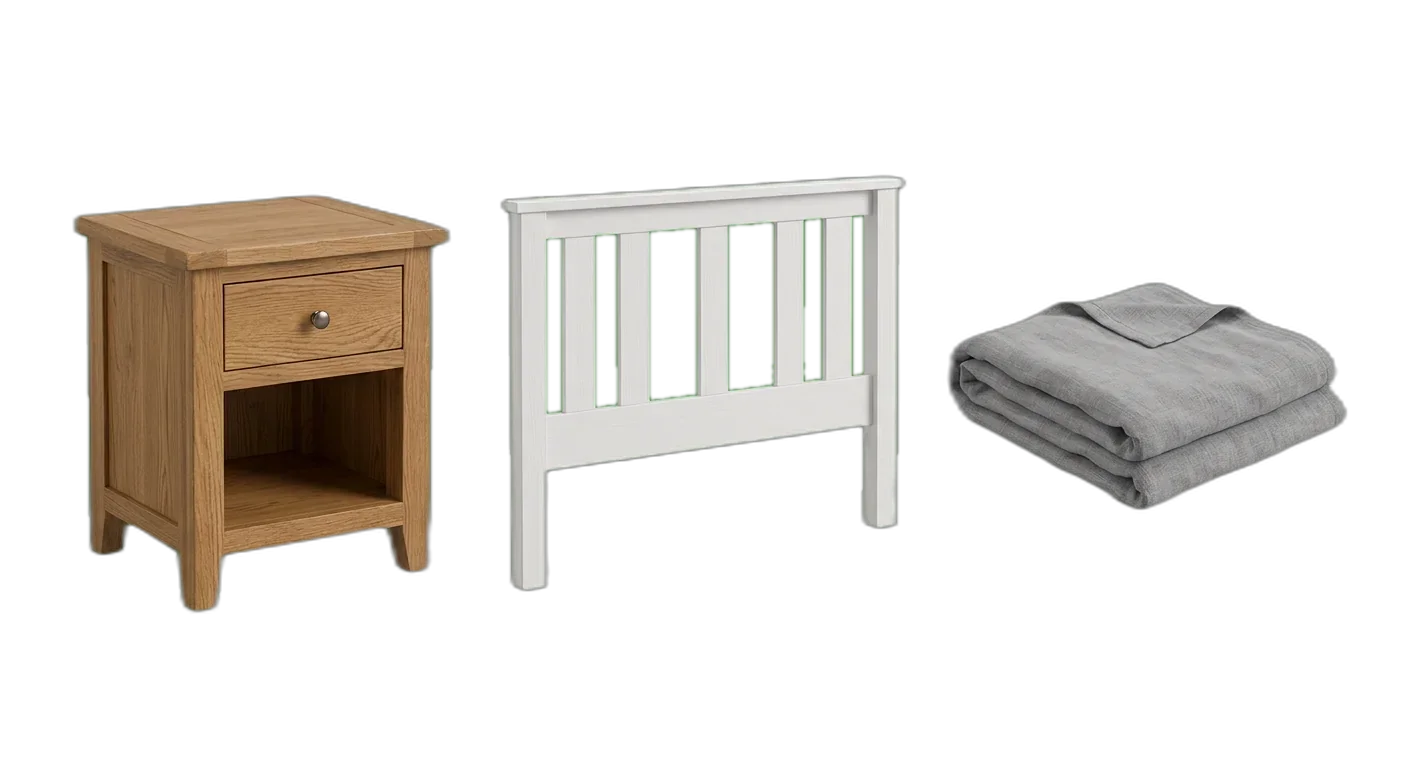
Slaapkamer
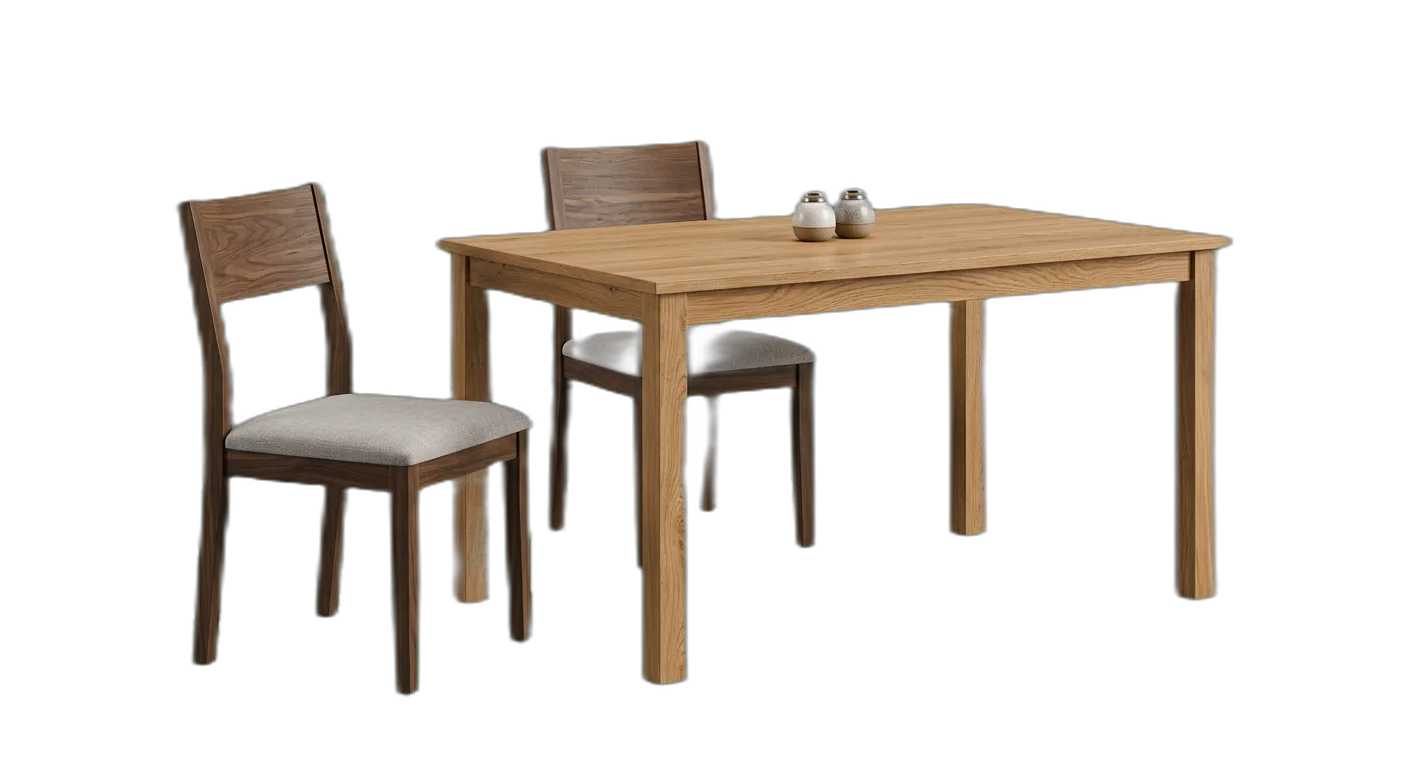
Eetkamer
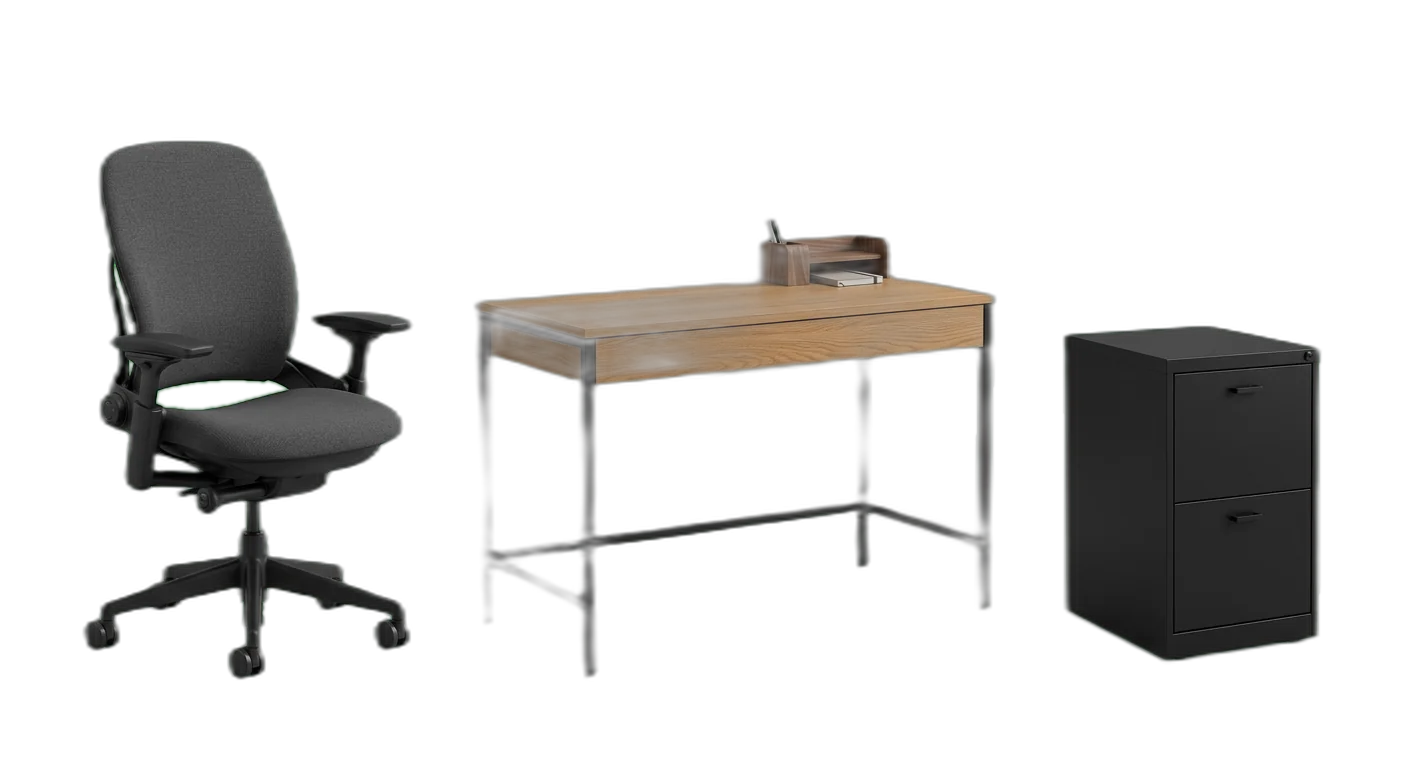
Thuiskantoor
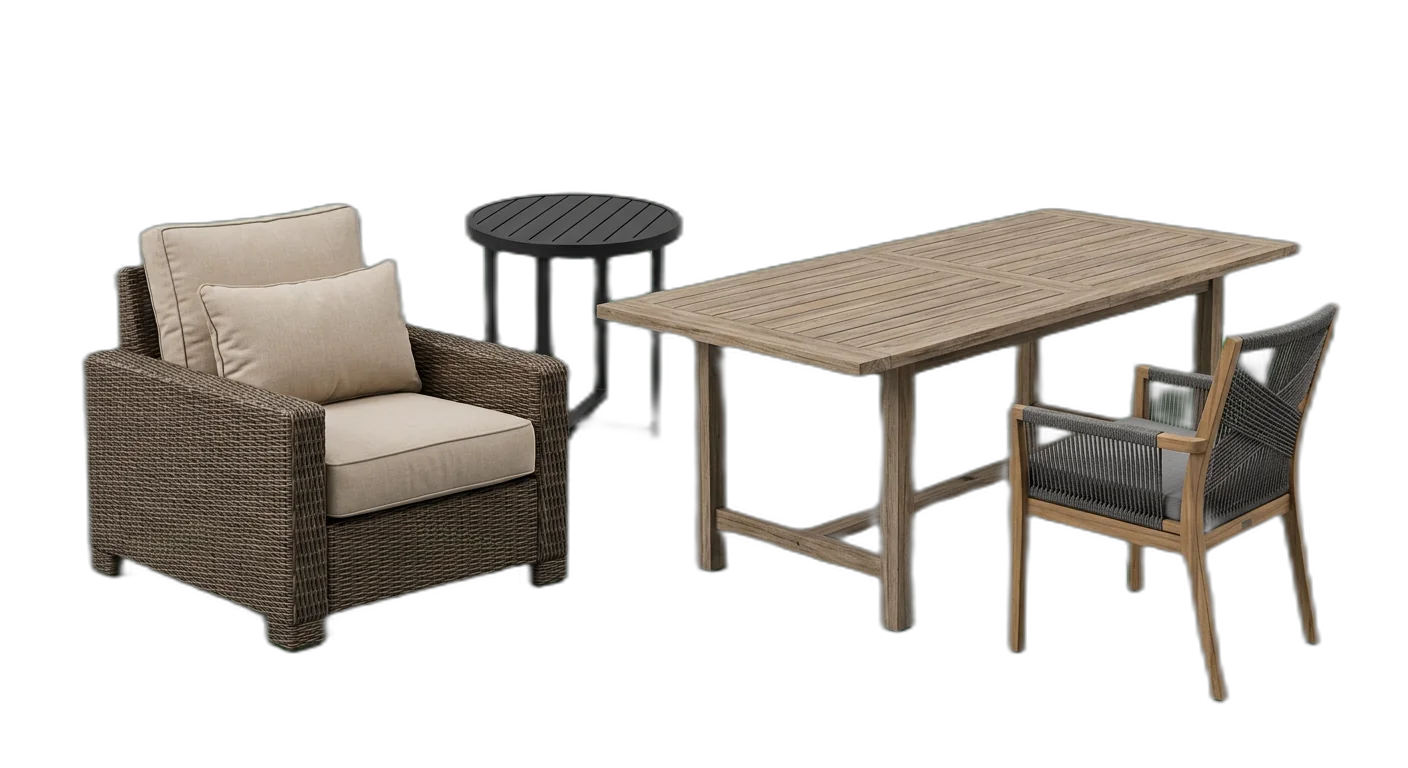
Tuinmeubelen
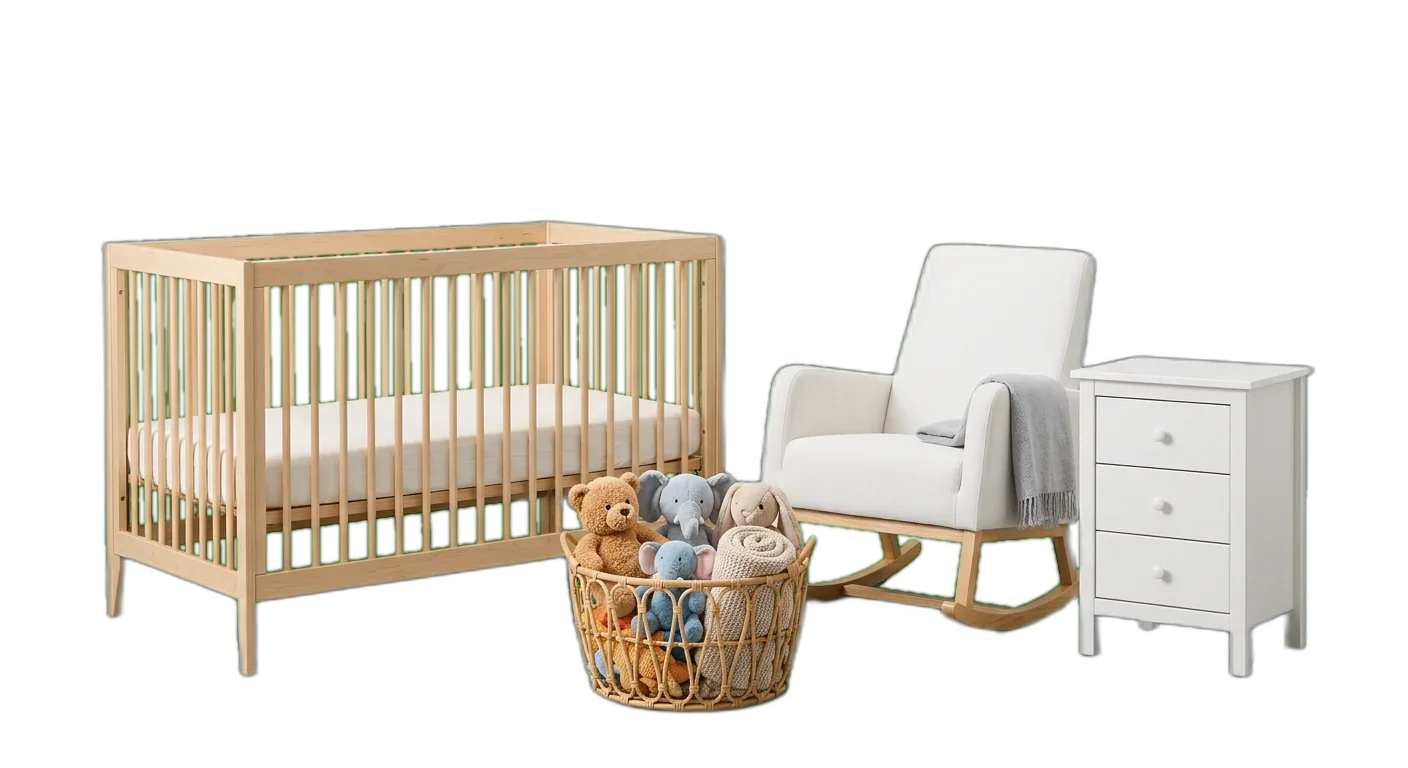
Kinderkamer & babykamer
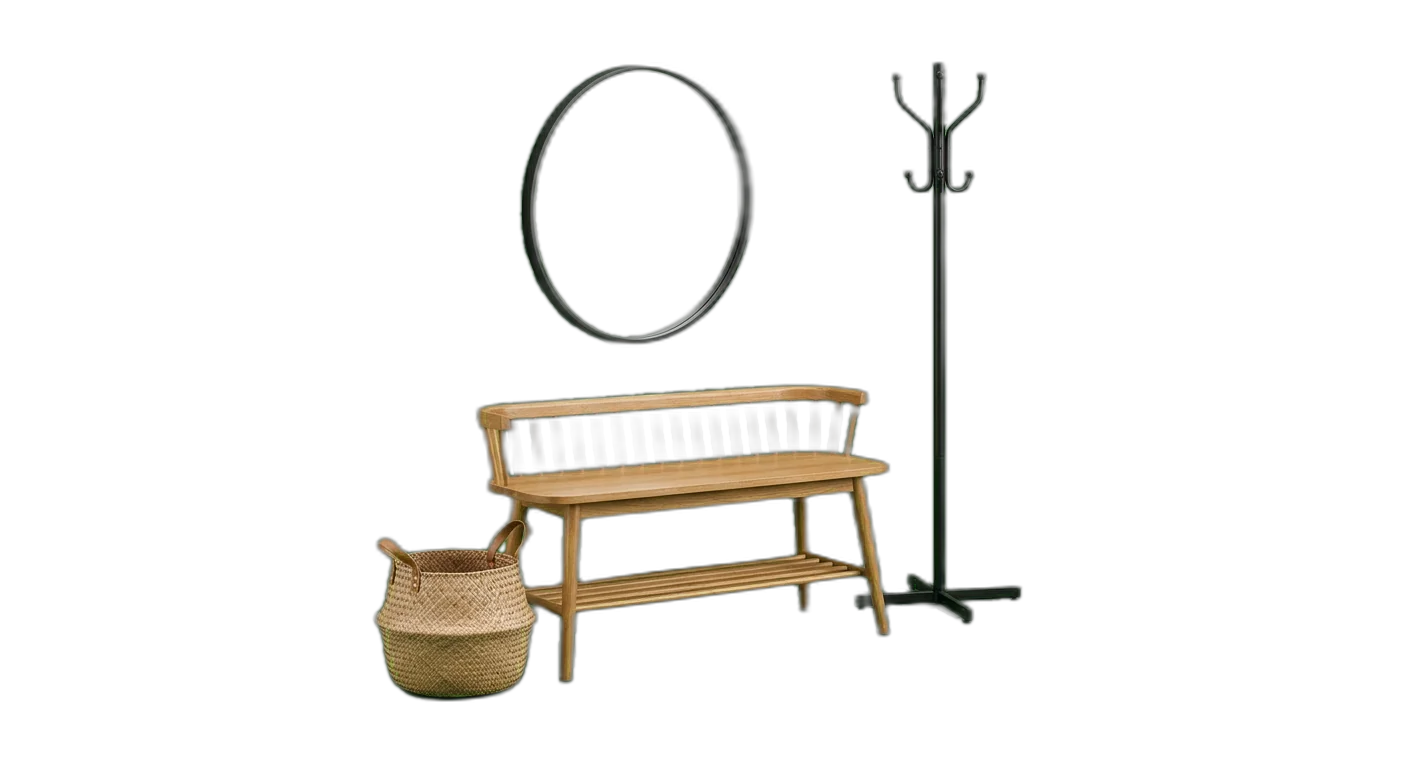
Entree & hal
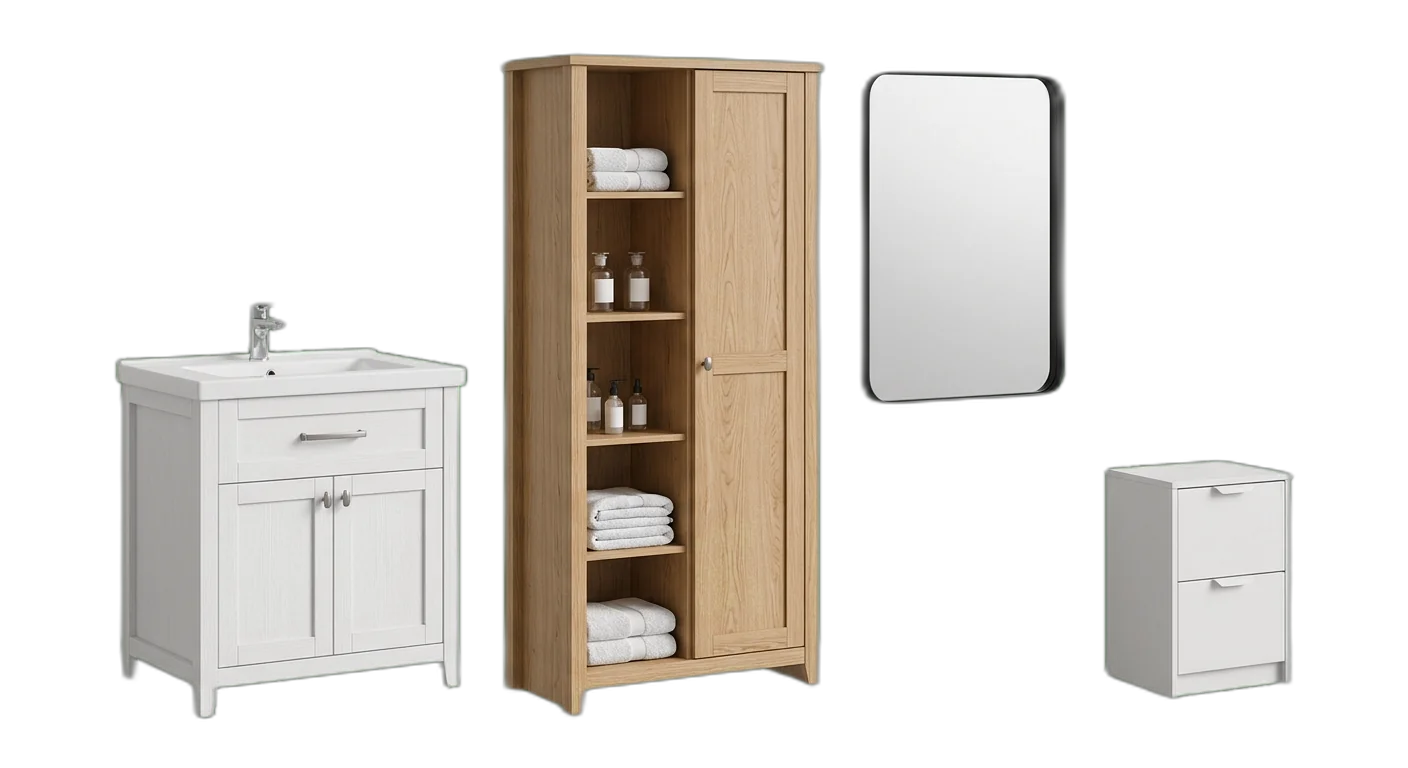
Badkamermeubels
Met welke categorieën begin je het best?
Kies je startcategorieën op basis van je catalogusgrootte en groeifase
Richt je op één kamer en bouw een compleet aanbod voor die ruimte. Een diep woonkamer- of slaapkamerassortiment presteert beter dan een verspreide mix van items uit elke kamer.
Breid uit naar 3-4 kamers die dezelfde doelklant bedienen. Voeg binnen elke kamer aanvullende categorieën toe om complete kameroplossingen te bieden.
Dek alle grote kamers met diepe subcategorieën. Investeer in collectiegebaseerde merchandising, een kamerplanner en aanbevelingen voor bundels over categorieën heen.
Hoe orden je categorieën in je webshop menu?
Praktische tips om je navigatie zo in te richten dat je meer clicks en conversies haalt
Zet je drukst bezochte kamercategorieën vooraan
"Woonkamer" en "Slaapkamer" horen altijd je eerste twee menu-items te zijn. Daar komen de meeste meubelzoekopdrachten en het grootste deel van je omzet vandaan.
Bied een visuele 'Shop per kamer'-navigator
Meubelkopers denken in kamers. Een visuele kamerkiezer op je homepage laat klanten direct naar hun doelcategorie springen en werkt beter dan navigatie met alleen tekst.
Houd je hoofdmenu onder de 7-8 kamercategorieën
Te veel items op het hoogste niveau zorgen voor keuzestress. Groepeer kleinere kamers samen, zoals 'Kleine ruimtes' met hal, badkamer en wasruimte.
Voeg stijlfilters toe naast kamercategorieën
Laat klanten binnen elke kamercategorie filteren op stijl (modern, Scandinavisch, industrieel). Stijlgebaseerd browsen vult je kamerstructuur aan zonder de categoriestructuur te verdiepen.
Zet 'Sale' en 'Opruiming' achteraan in de navigatie
Opruimingsartikelen zijn belangrijk voor meubelretail, maar mogen niet afleiden van browsen op volle prijs. Zet sale-items achteraan zodat je kerncatalogus de meeste aandacht krijgt.
Wanneer piekt elke categorie?
Stem je voorraad en marketing af op seizoensverschuivingen in de vraag
Lente (mrt-mei)
Piekcategorieën
De vraag naar tuinmeubelen piekt in april. Het voorjaarsverhuisseizoen stimuleert de verkoop van eetkamer- en slaapkamermeubelen.
Zomer (jun-aug)
Piekcategorieën
Zomer is het topverhuisseizoen. Terug-naar-school stimuleert de aankoop van kinderbureaus en -stoelen in augustus.
Herfst (sep-nov)
Piekcategorieën
De vraag naar woonkamermeubelen piekt als mensen zich voorbereiden op de koelere maanden. Black Friday trekt alle meubelcategorieën in november omhoog.
Winter (dec-feb)
Piekcategorieën
Nieuwjaarsgoede voornemens rond thuisorganisatie stimuleren garderobe- en opbergaankopen. De januariverkoop is belangrijk voor het opruimen van seizoensgebonden buitenvoorraad.
Categorieën die goed samengaan
Combineer verwante categorieën om je gemiddelde bestelwaarde te verhogen
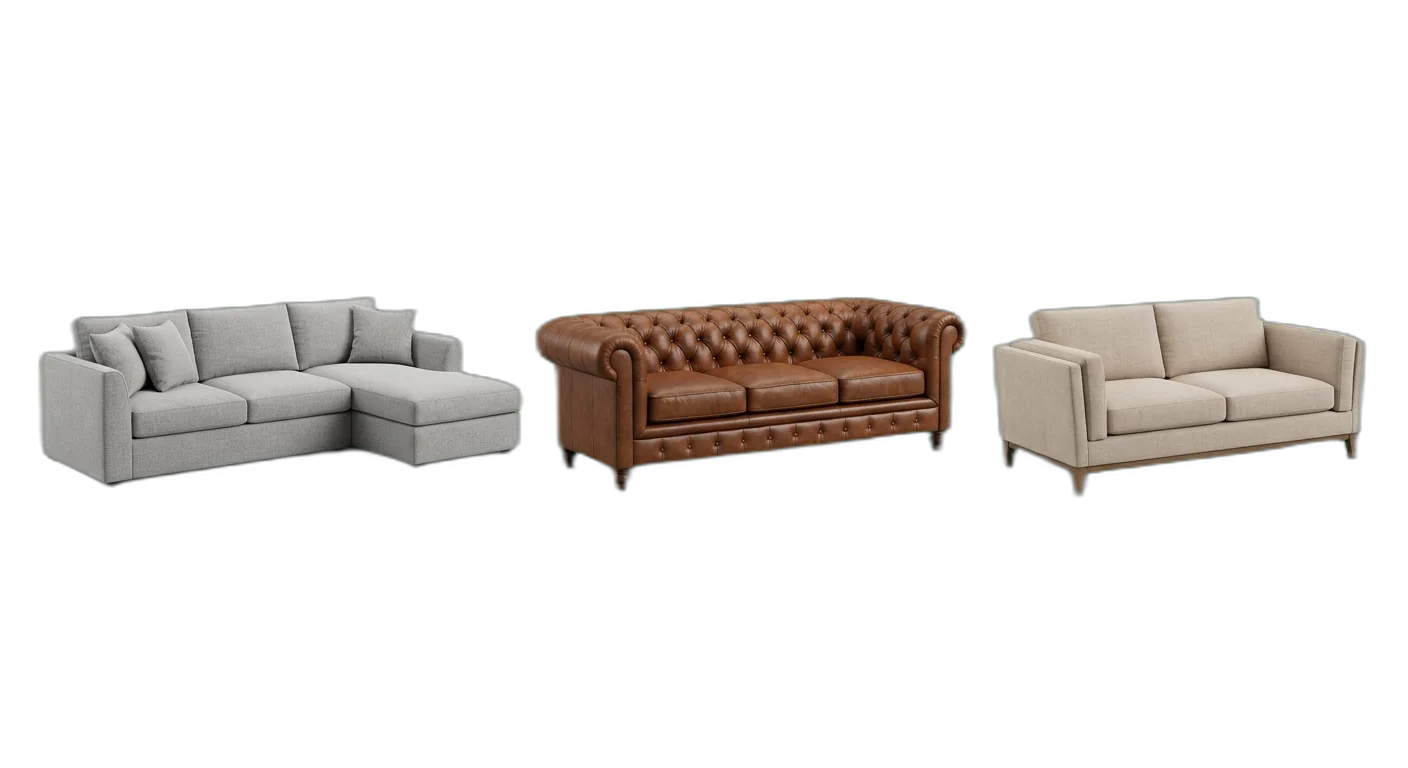
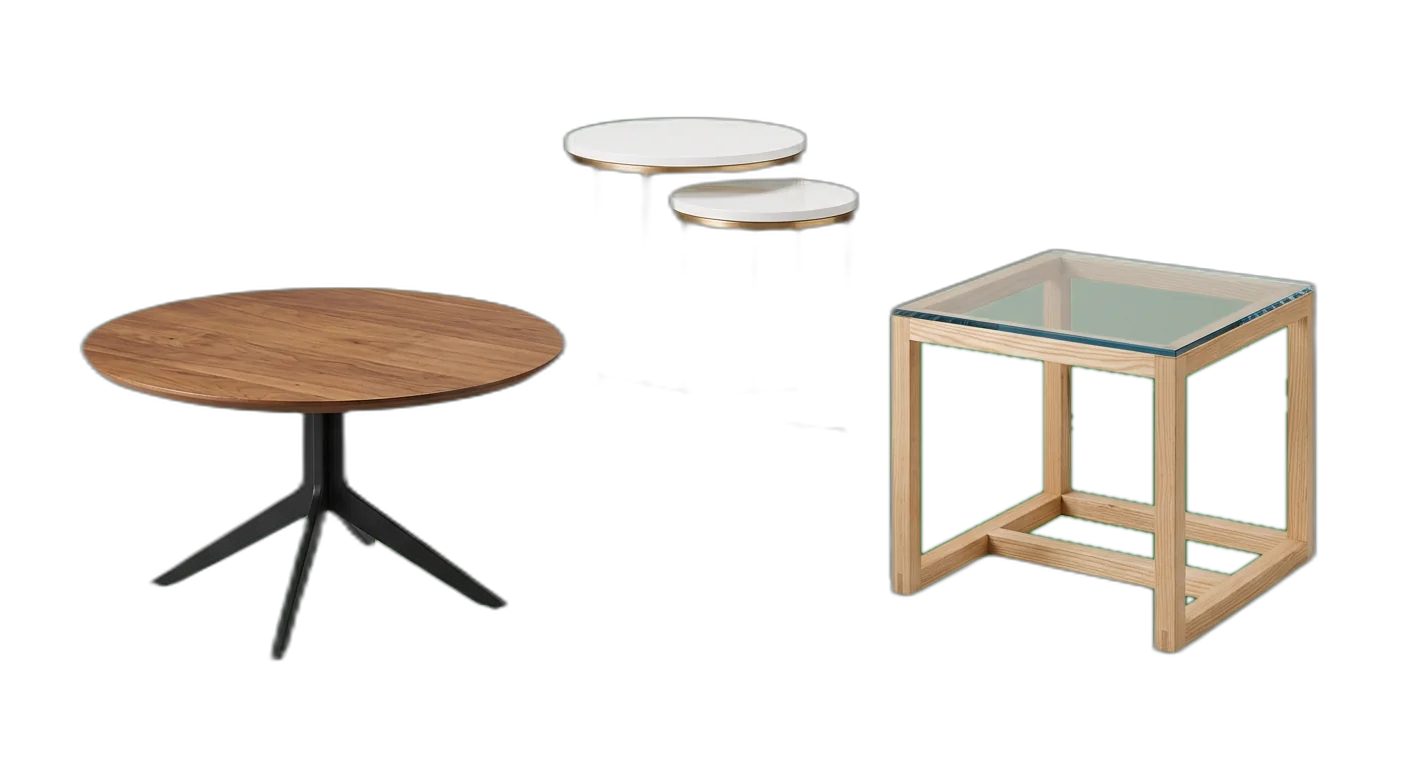
Een bank kopen is eigenlijk een woonkamerproject, en de salontafel is het stuk dat erbij moet passen. Toon altijd bijpassende tafelaanbevelingen.
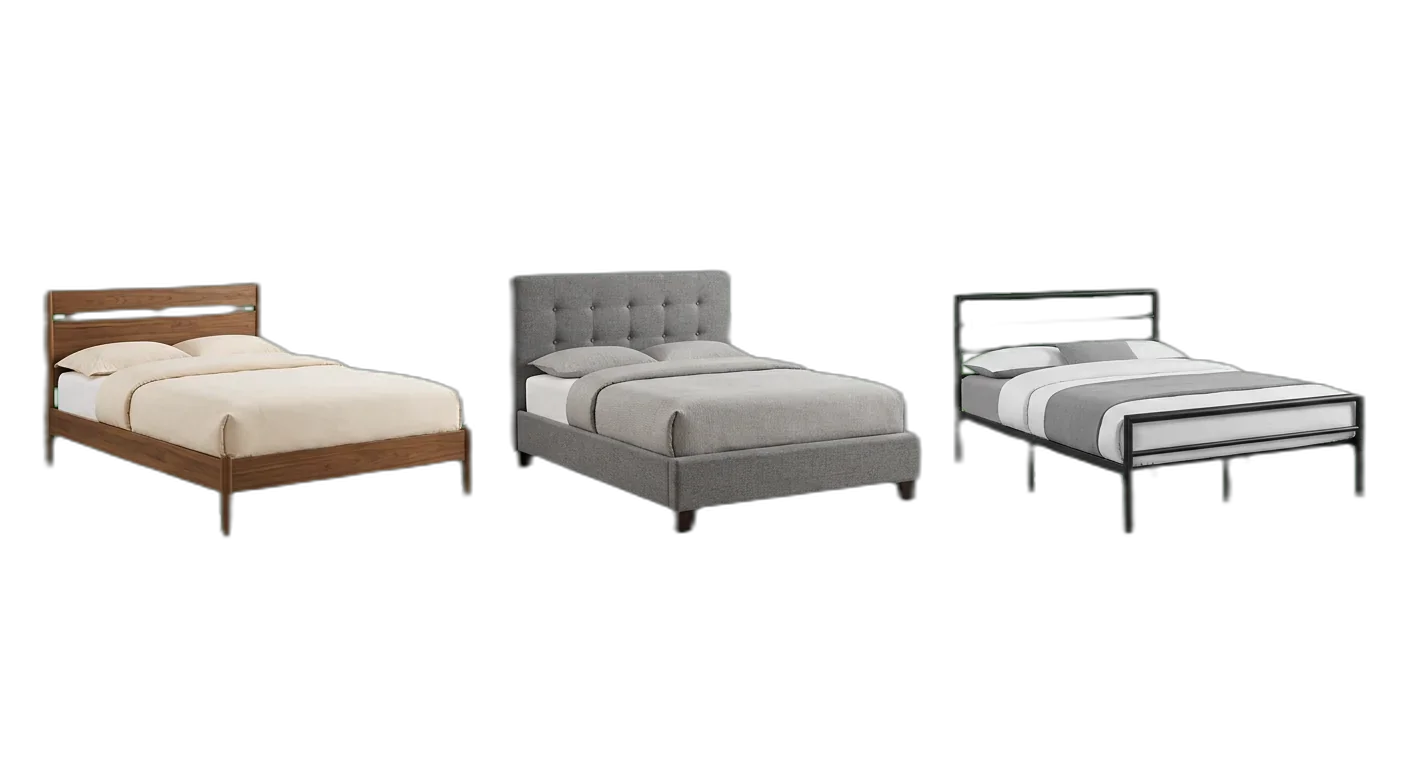
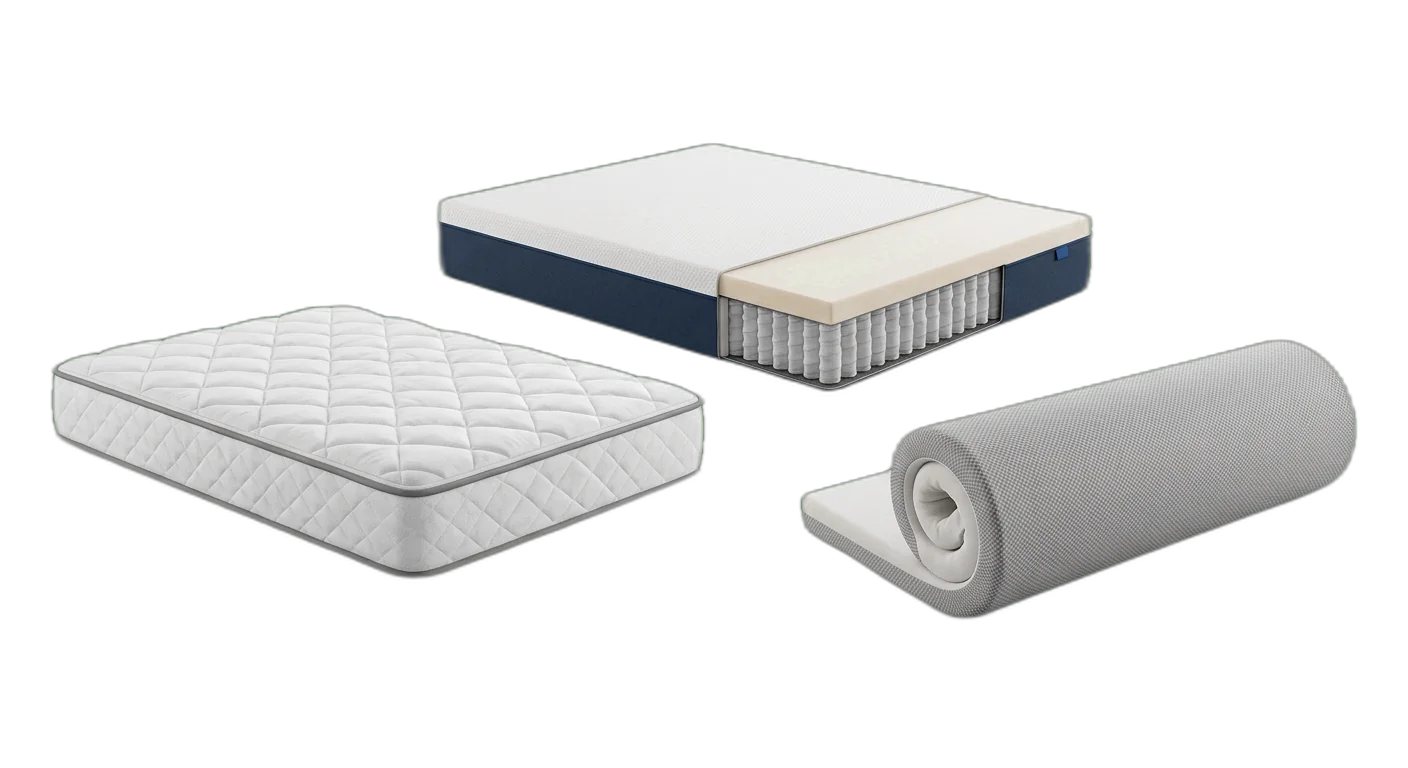
Bedframekopers die nog geen compatibele matras hebben, zullen er een nodig hebben. Bundelen bespaart ze verzendkosten.
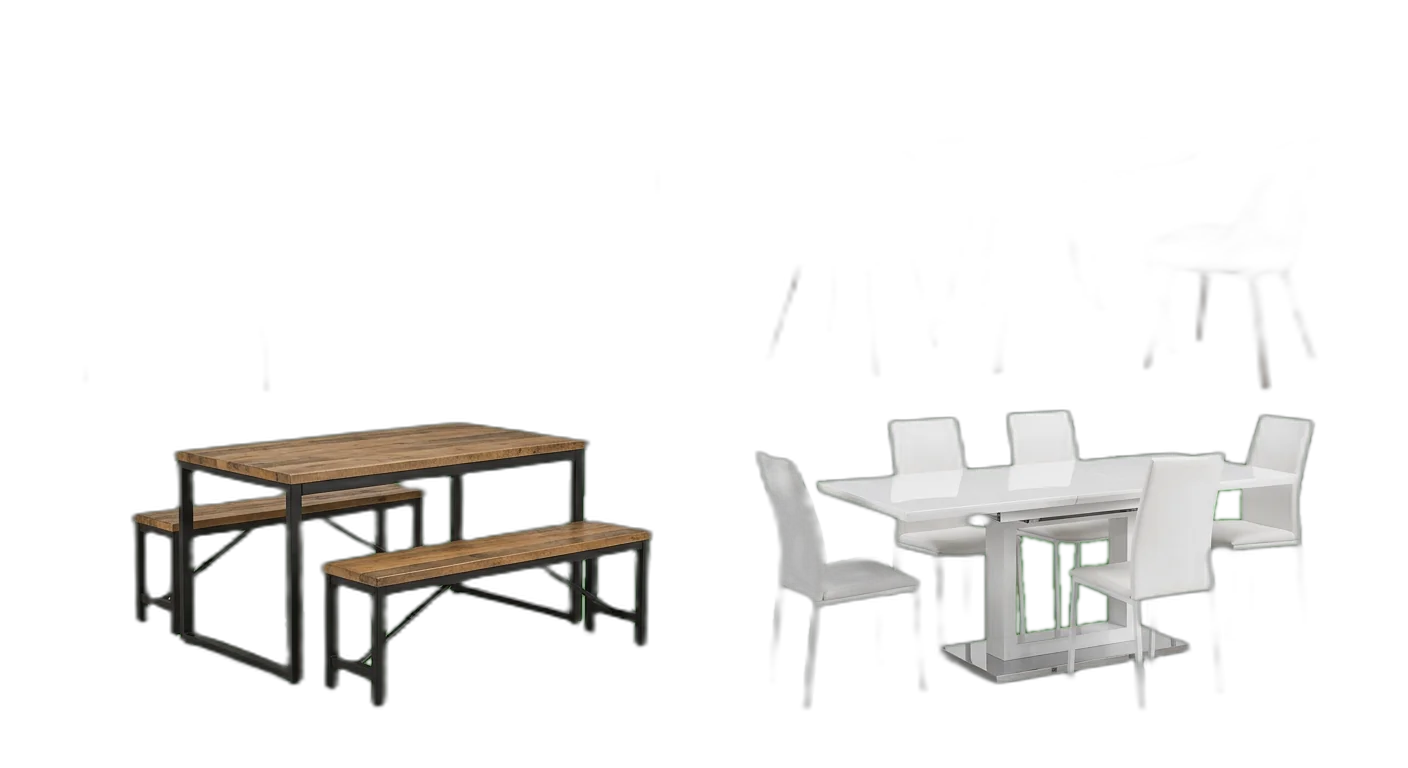
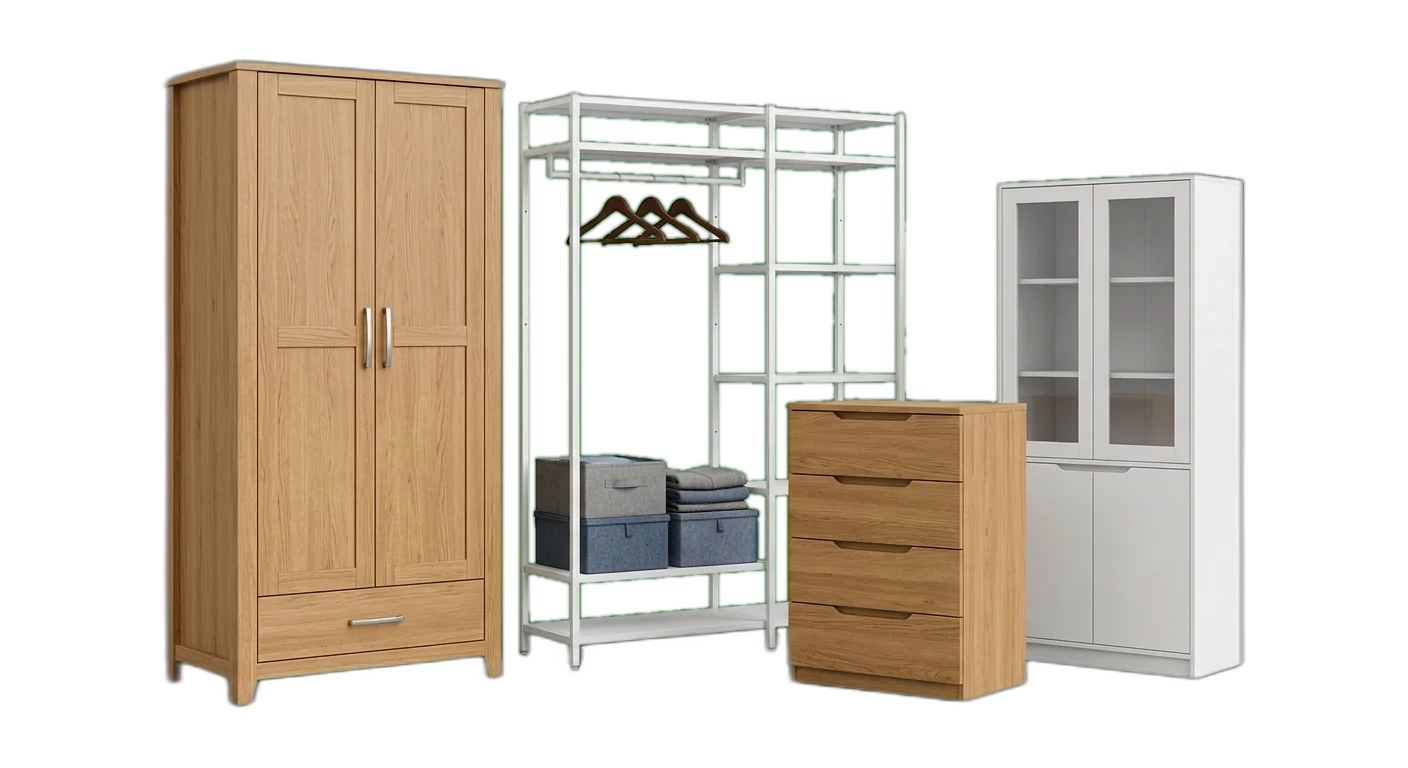
Klanten die een nieuw huis inrichten kopen doorgaans eetkamer- en slaapkameropberging in dezelfde periode.
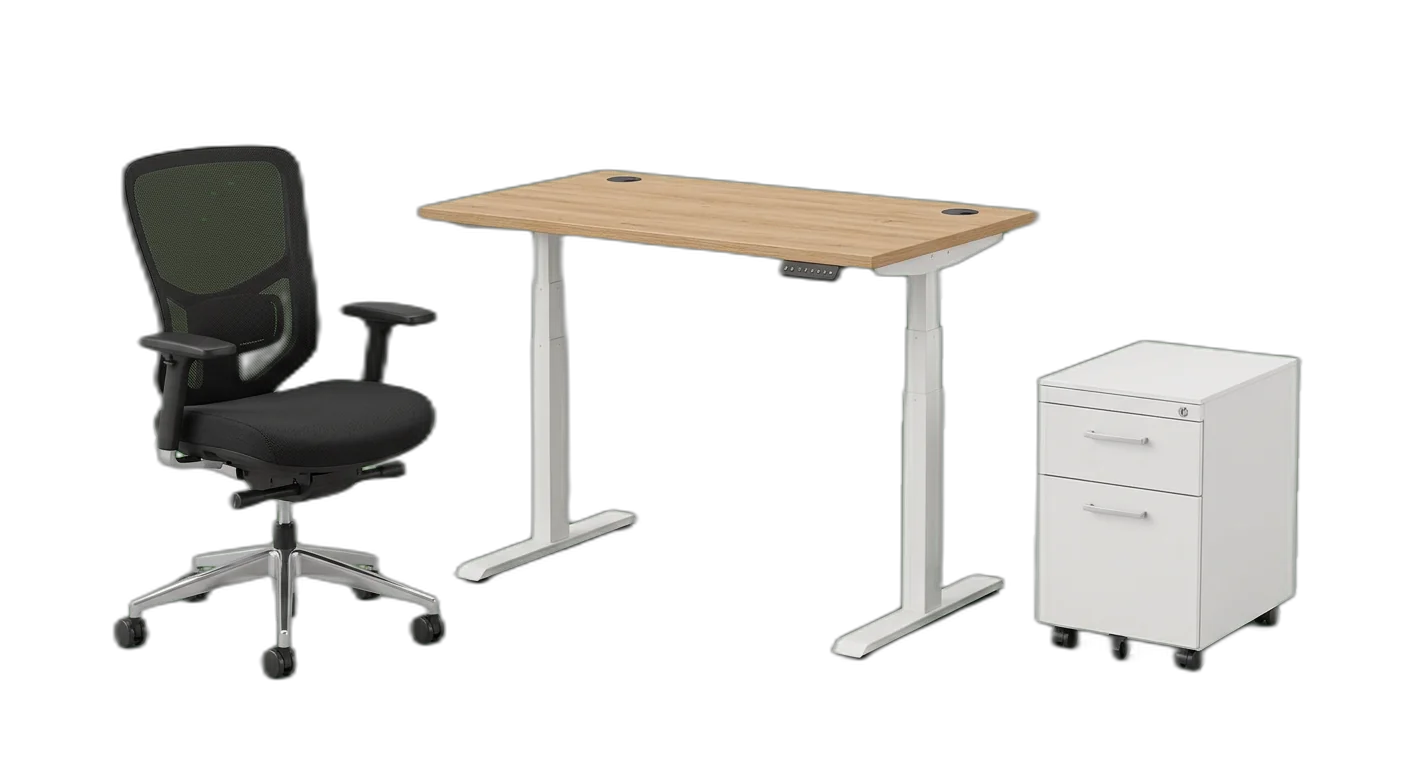
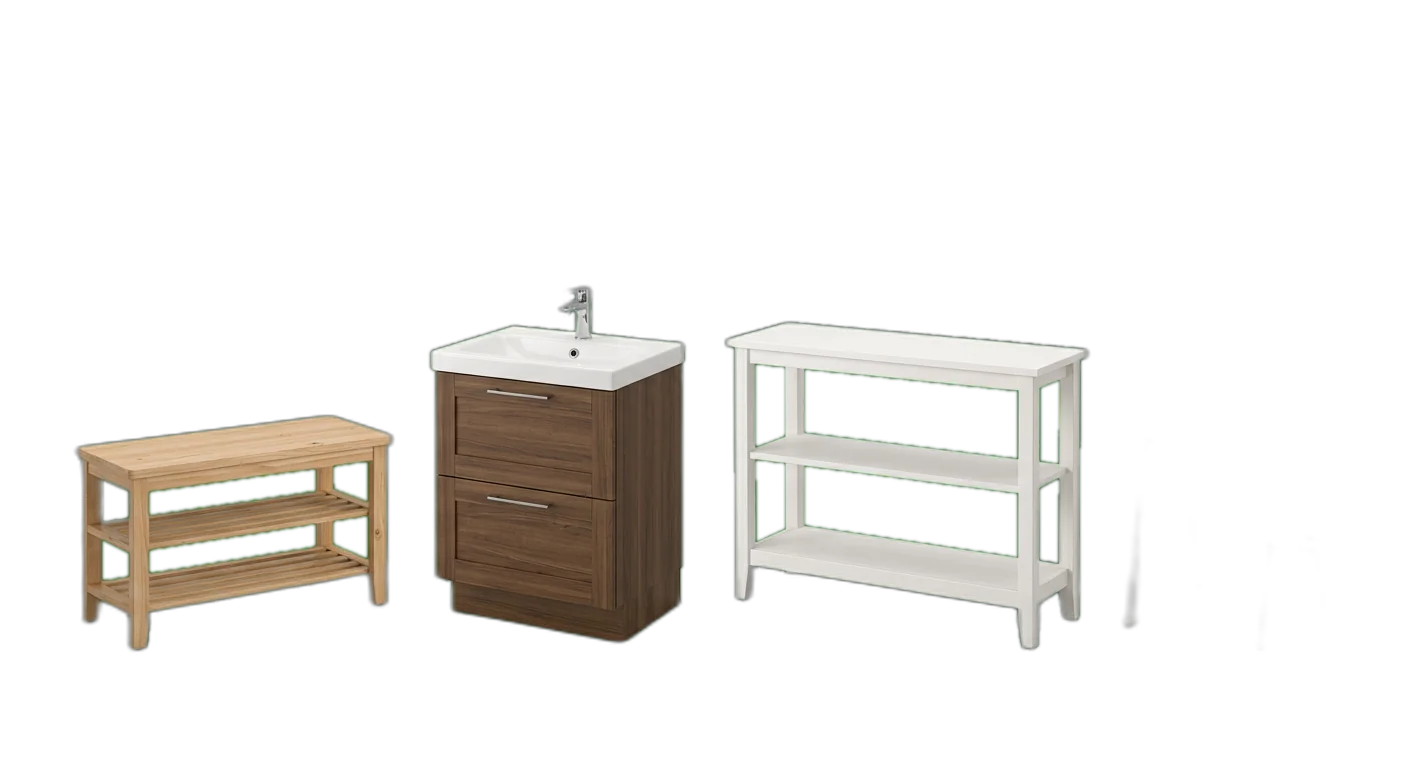
Thuisrenoveerders pakken vaak meerdere kamers tegelijk aan. Bureaukopers bekijken regelmatig ook hal- en opbergoplossingen.
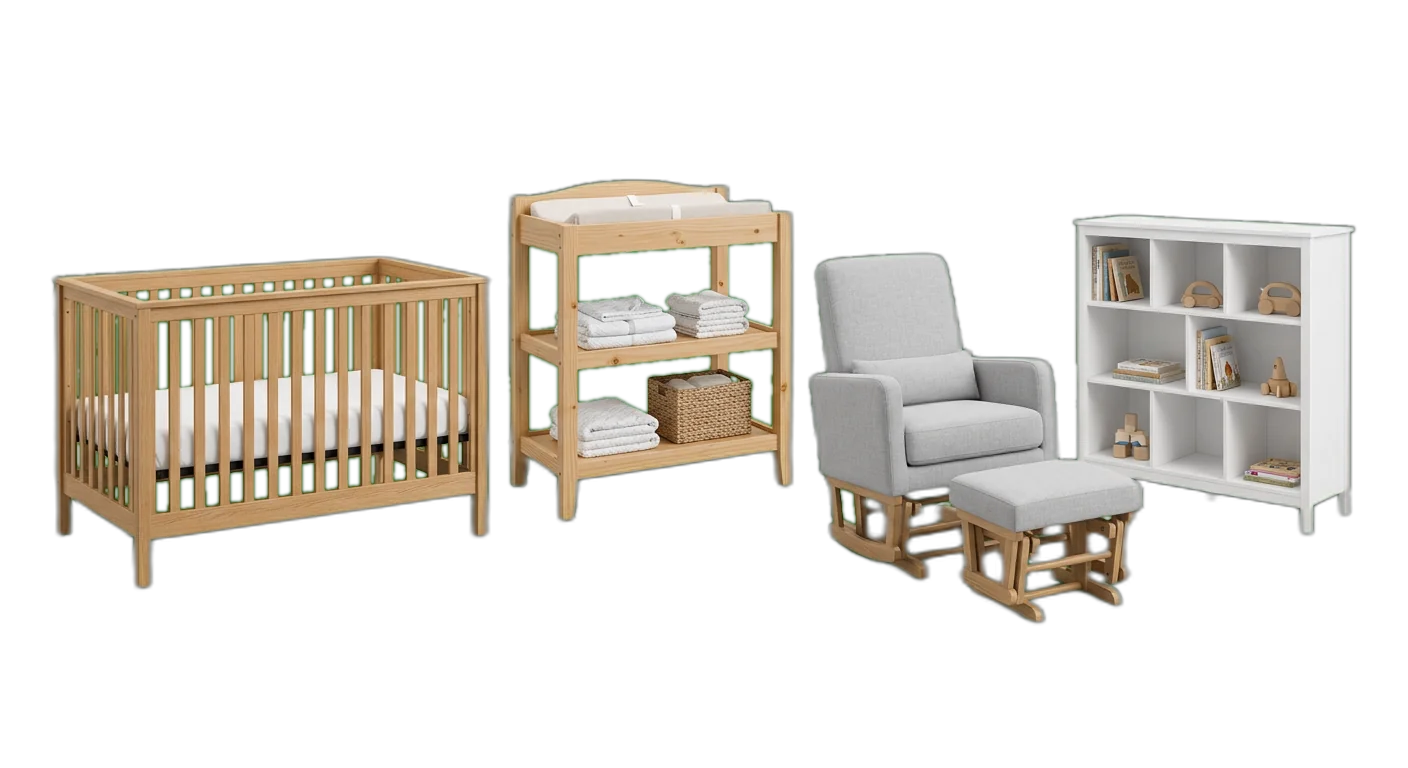
Ouders die een babykamer inrichten, vernieuwen vaak tegelijkertijd hun eigen slaapkamermeubelen.
Veelgemaakte fouten bij Meubels categoriekeuzes
Fouten die je vindbaarheid, SEO en conversieratio schaden
- Fout
Stijlnamen als hoofdcategorieën gebruiken (Moderne Meubelen, Scandinavische Meubelen) in plaats van kamer en type
Betere aanpakGebruik kamergebaseerde hoofdcategorieën met meubeltype-subcategorieën, en voeg Stijl toe als filterbaar kenmerk. Stijlen zijn subjectief en veranderen met trends, terwijl kamers en meubeltypes stabiele indelingspunten zijn.
- Fout
Fysieke afmetingen weglaten uit productdata en alleen rekenen op vage maataanduidingen zoals Klein, Medium of Groot
Betere aanpakVermeld altijd exacte breedte, diepte en hoogte in centimeters. Voeg zowel gemonteerde afmetingen als verpakte afmetingen toe voor verzending. Maataanduidingen kunnen aanvullen, maar nooit exacte maten vervangen.
- Fout
Montagevereisten niet specificeren, waardoor klanten niet weten wat ze bij levering kunnen verwachten
Betere aanpakVoeg het montagetype toe (plat verpakt, gedeeltelijke montage, volledig gemonteerd), een tijdsinschatting, benodigd gereedschap en of professionele montage beschikbaar is. Zo voorkom je de servicevragen en retouren van klanten die pas na levering ontdekken wat het monteren inhoudt.
- Fout
Hetzelfde product in meerdere kamercategorieën plaatsen, wat dubbele vermeldingen en voorraadverwarring oplevert
Betere aanpakWijs elk product toe aan zijn primaire kamer. Gebruik een 'Secundaire kamer'-kenmerk of cross-sell tags voor zichtbaarheid in meerdere kamers. Een boekenkast die in de woonkamer of het kantoor past, hoort in één categorie thuis met tags voor de andere.
- Fout
Binnen- en buitenmeubelen in dezelfde categoriestructuur mengen zonder duidelijke scheiding
Betere aanpakHoud Tuinmeubelen als aparte hoofdcategorie met eigen subcategorieën en weergerelateerde kenmerken (UV-bestendigheid, waterdichtheid) die niet van toepassing zijn op binnenmeubelen.
Stel Meubels categorieën in met AI
Krijg je Meubels productcategorieën in minuten op orde, niet in dagen
01
Importeer je meubelcatalogus
Upload je productdata via CSV, Excel of API. WISEPIM detecteert automatisch relevante kenmerken zoals afmetingen, materialen, montagetype en kamertoewijzing vanuit je bestaande productdata.
02
AI categoriseert je producten
De AI van WISEPIM analyseert productafbeeldingen, titels en beschrijvingen om elk meubel toe te wijzen aan de juiste kamercategorie en het juiste meubeltype. Het herkent materialen, stijlkenmerken en montagevereisten, en markeert producten met ontbrekende gegevens zoals afmetingen.
03
Controleer, verfijn en publiceer
Bekijk AI-suggesties in bulk, vul ontbrekende afmetingen en montagegegevens aan, en zet je gecategoriseerde catalogus op alle verkoopkanalen. WISEPIM koppelt je kamergebaseerde categorieën automatisch aan de taxonomieën van Google Shopping, Amazon, Wayfair en andere platforms.
Veelgestelde vragen
Veelgestelde vragen over het kiezen van Meubels categorieën voor e-commerce
Beste categorieën voor andere branches
Printbare checklist
Begin in 15 minutenBeslis in één week of een nieuwe categorie loont
Begin bij de vraag: 15 minuten in Google Trends. Je krijgt één telling, zoals 2 van 3 termen stijgen. Daarna 5 stappen voor de rest van de week.
Zo werkt het
- Kies de 3 zoektermen die klanten voor de categorie gebruiken.
- Zoek ze alle drie op in Google Trends over 2 jaar.
- Schrijf het aantal op, zoals '2 van 3 termen stijgen'.
Eén mail, één keer, met een link naar de printbare checklist. Verder niets, tenzij je het vakje aanvinkt.
Gratis Excel-template
XLSX · 3 tabbladenZie welke van je 20 bestsellers nog niet compleet zijn
Een Excel-check met de kolommen die je voor meubels nodig hebt. In ongeveer 15 minuten weet je hoeveel van je 20 producten compleet zijn, en welke verbetering de meeste rijen helpt.
Zo werkt het
- Plak 20 bestsellers uit je webshopexport in Producten.
- Vul in wat je weet. De laatste kolom zegt per rij wat er ontbreekt.
- Lees je resultaat op Begin hier: hoeveel er compleet zijn en welke verbetering de meeste rijen helpt.
Eén mail, één keer, met de XLSX als bijlage en als downloadlink. Verder niets, tenzij je het vakje aanvinkt.
Verder ontdekken
Zorgvuldig gekozen vervolgstappen om dieper te gaan.
Klaar om je Meubels catalogus te organiseren?
WISEPIM gebruikt AI om je producten automatisch te categoriseren, attributes in te stellen en te synchroniseren met al je verkoopkanalen.