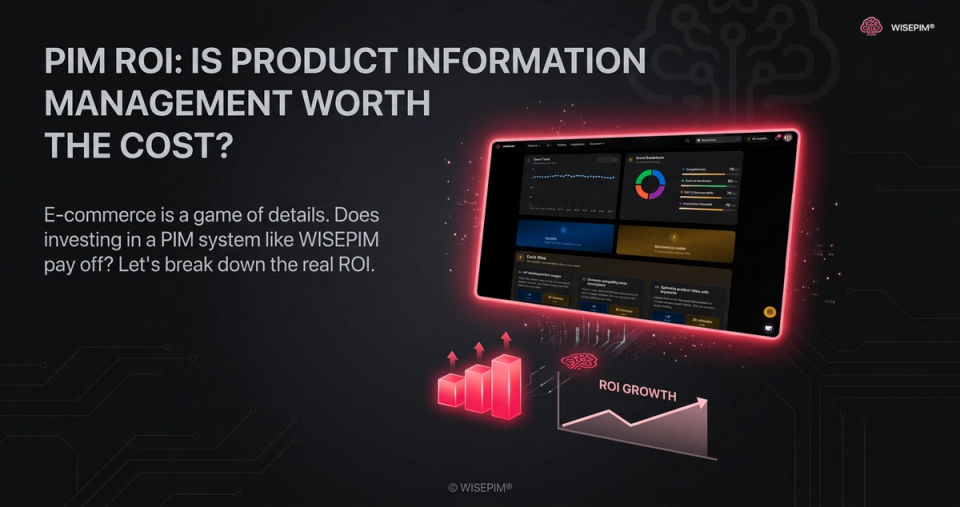
E-commerce is a game of details. Product information, once a back-office necessity, is now a customer-facing experience. But does investing in a Product Information Management (PIM) system actually pay off? Let's break down the real ROI of PIM and whether it's the right move for your business.
Understanding the Core Value Proposition of PIM
At its heart, a PIM system is about centralizing, enriching, and distributing product data across all your sales channels. This includes everything from basic attributes like size and color to rich media like images and videos, as well as marketing copy and technical specifications. The core value proposition boils down to:
- Data Accuracy: Ensuring consistent and accurate product information everywhere.
- Time Savings: Streamlining product data management processes.
- Improved Customer Experience: Providing customers with the information they need to make informed purchase decisions.
- Faster Time-to-Market: Quickly launching new products and updates across all channels.
But how do these translate into tangible ROI?
Quantifying the Benefits: Where the Returns Come From
Calculating the ROI of a PIM system involves looking at both cost savings and revenue gains. Here's a breakdown of key areas:
1. Reduced Product Launch Time
Launching a new product can be a logistical nightmare without a centralized system. Think of coordinating spreadsheets, manually updating multiple platforms, and the inevitable errors that creep in. A PIM system streamlines this process. You enrich a product once and publish it to every channel, so new products reach the market sooner and in time for seasonal trends.
2. Increased Sales Conversion Rates
Accurate and complete product information is crucial for driving sales. Studies show that customers are more likely to purchase products when they have access to detailed descriptions, high-quality images, and customer reviews. In Salsify's 2024 consumer research, 42% of shoppers said bad product titles and descriptions are enough to abandon a cart. A PIM system helps ensure that your product information is consistent and compelling across all channels, leading to higher conversion rates.
3. Decreased Product Returns
Inaccurate or incomplete product information is a major driver of product returns. When customers receive a product that doesn't match their expectations, they're likely to return it. In Akeneo's 2025 Consumer Returns Report, about 60% of shoppers said they had returned a product because of an inaccurate or misleading description. A PIM system helps reduce returns by ensuring that product information, including sizing, is accurate and up-to-date.
4. Improved Operational Efficiency
Managing product data manually is time-consuming and error-prone. A PIM system automates many of these tasks, freeing up your team to focus on more strategic initiatives.
5. Expanded Channel Reach
A PIM system makes it easier to expand your reach to new sales channels. By centralizing product data and providing tools for channel-specific formatting, you can quickly and easily launch products on new marketplaces and platforms.
The Soft Benefits: Intangible Advantages that Drive Long-Term Growth
Beyond the hard numbers, a PIM system also offers a range of soft benefits that contribute to long-term growth:
- Improved Brand Consistency: Ensuring a consistent brand experience across all channels.
- Enhanced Collaboration: Facilitating collaboration between different teams, such as marketing, sales, and product development.
- Better Data Governance: Establishing clear processes for managing product data.
- Increased Agility: Responding quickly to changing market demands.
Calculating Your Potential PIM ROI: A Step-by-Step Approach
To determine whether a PIM system is right for your business, you need to calculate your potential ROI. Here's a step-by-step approach:
Calculating your PIM ROI in four steps
| 1. Identify your pain points | What are the biggest challenges you face in managing product data? | Slow product launches, high return rates, inconsistent product information |
|---|---|---|
| 2. Quantify their cost | How much are these challenges costing you? | Lost sales, wasted time, increased expenses |
| 3. Estimate the benefits | How much could you save or gain by addressing them with a PIM? | Savings and revenue gains on the pain points from step 2 |
| 4. Calculate the ROI | Divide the potential benefits by the cost of the PIM, then multiply by 100 | Your ROI percentage |
Making the Decision: Is PIM Right for You?
A PIM system is not a one-size-fits-all solution. It's most beneficial for businesses that:
Is a PIM right for you?
If you're facing these challenges, a PIM system could be a worthwhile investment. By centralizing, enriching, and distributing product data, a PIM system can help you improve your customer experience, increase sales, and streamline your operations. It's about transforming product content from a cost center into a competitive advantage.