For groups with several brands
PIM for Multi‑Brand Groups
One group standard, every brand its own voice
Give every brand its own project under one organization. The group sets the attribute standard once, and each brand writes, translates and publishes in its own voice.
- 70+ languages
- Own channels per brand
- SOC 2 Type II aligned
Key features
A project per brand
Each brand keeps its own catalog, languages, channel connections and team, under one organization.
Group standards, copied
Build the attribute model, categories and code sets once and copy them into every brand project.
A budget per brand
Each brand spends AI credits from the group pool or from a fixed budget you set.
Who it's for
Built for groups with several brands
WISEPIM fits when a group runs several brands that each own a catalog, and someone at group level has to keep them on one standard.
Built for you if
- You run several brands, each with its own catalog, team and tone of voice
- Your brands sell in several countries and languages, through their own stores, retailers and marketplaces
- A central team sets product data standards, while brand teams want to keep control of their own content
- Finance wants AI and translation spend per brand, not one group total
- You manage 10,000 or more SKUs across the brands
- You have a group-level sponsor and an owner for product data in each brand
Probably not yet if
- You run one brand: our page for brands fits you better
- Your brands share one catalog and one team: a single project on a published plan is enough
- You need SAML SSO or SCIM provisioning before anything else: WISEPIM does not offer them today
Not sure? Bring the same product type from two of your brands to a demo and see one standard and two voices side by side.
Why groups get stuck
Where multi-brand product data breaks
Most brands were built on their own: their own spreadsheets, attribute names, agencies and channels. That works until the group needs one standard.
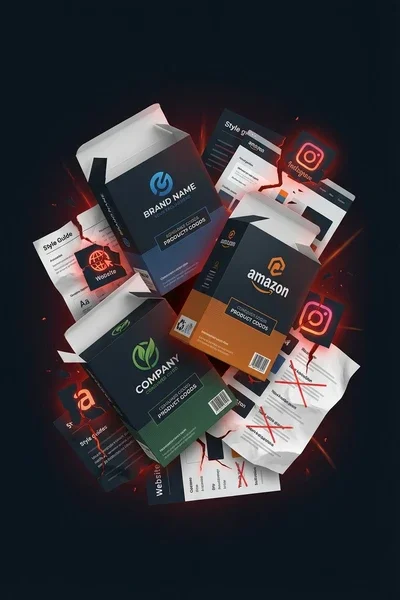
Every brand invented its own data model
One brand calls it colour, the next calls it shade, a third keeps it in the description. The group cannot compare ranges, reuse content or add a new brand without starting over.
Central copy flattens every brand
When the group writes centrally, a premium brand and a value brand end up sounding alike. When each brand writes alone, nobody holds the standard.
Teams see more than they should
One shared catalog lets every team edit every brand. Separate tools per brand keep teams apart, but the group loses sight of all of them.
Every market picks its own terms
Brands use different agencies and glossaries, so the same material or claim reads three ways in German and nobody knows which one is approved.
Shared products drift apart
A product sold under two brands gets corrected in one catalog and stays wrong in the other.
One brand borrows another's claims
Copy reused across brands carries claims, warranties and wording that belong to only one of them, and nobody notices until a retailer or a market regulator does.
How WISEPIM solves it
What the group gets
Six things a group product data team sets up once, each backed by a feature you can open in the product.
A project per brand, one organization
Each brand gets its own project with its own catalog, languages, channel connections and team. The Organization settings group the projects under one organization with its own admins.
Brands work in their own space, and the group sees each brand's spend in one organization.
Group standards, copied not retyped
Build the attribute model, category tree and code sets once, then copy them into each brand project. Copy again after a change and each brand project takes over the new definitions. Compare one SKU across two brands and sync the fields that should match.
A new brand starts on the group standard, not on a blank sheet.
Each brand keeps its own voice
Every project has its own Knowledge Library and its own prompts, so AI writes each brand in its own tone. Phrases to avoid keep one brand's claims out of another brand's copy, and Content Logic brand fields add the details that must read the same every time.
A premium brand and a value brand stop sounding alike.
Roles for every brand team
Admin, Editor, Viewer or a custom role per project. A practical split: the group data team edits the standard attributes, such as dimensions, material and certifications, while brand editors get a custom role limited to the text fields and attributes they own. The server checks it on every save.
The group owns the facts, each brand owns its words.
A budget for every brand
Fund one organization credit pool and let each brand project spend from it, or give a brand a fixed budget. When a budget runs out, paid AI actions pause instead of drawing on another budget, and monthly caps per member keep spend in check.
AI and translation spend you can charge back per brand.
Ready per brand and per channel
Quality Guard rules, workflows with a Review queue and Channel Readiness in Feed Hub show per project what is missing before a brand publishes. A translation glossary per project keeps the approved terms in every language.
Each brand ships complete products, checked against its own rules.
Integrations
Each brand keeps its own channels
Connections belong to a project, so every brand connects its own stores and feeds. Akeneo syncs both ways; other PIMs and ERPs connect by file or the REST API. Each brand can also give retailers a Brand Portal: a read-only, branded catalog link with the columns you choose.
- Shopify PlusImport from and publish to each brand's Shopify Plus store, including metafields.
- Magento 2Import from and publish to each brand's Magento 2 store.
- AkeneoAlready on Akeneo? Import a brand's products, enrich and translate them, and push the updates back.
- Google Merchant CenterExport each brand's products directly to Google Merchant Center.
- ChannableHand Channable an enriched, translated feed URL for each brand.
In the product
One standard, two brands, one product
Take a thermostatic shower mixer sold by a premium brand and a value brand. The group standard in both projects fixes the facts: brass, finish code CHR, a 1/2 inch connection. Each project's Knowledge Library sets the tone: craft and comfort for one brand, easy fitting for the other. Content Logic brand fields add what must read the same every time, such as the warranty note and website.
Set it up your way
How groups structure their brands
Most groups mix these setups: a project for each brand with its own team, brand fields for labels that share one, and one organization over all of it.
A project per brand
For brands with their own team, markets and channels: a separate catalog, roles, Knowledge Library and budget.
Clear ownership per brand
Several labels in one project
For labels one team runs together: Content Logic brand fields keep each label's tagline and details apart.
One catalog, distinct labels
A group master project
Keep the master attribute model, categories and code sets in one project and copy them out to each brand.
One place to change the standard
One organization over all of it
The organization owner funds the credit pool. Organization admins link the brand projects and set each brand's budget.
Spend per brand in one overview
Compared
Three ways to run many brands
Groups usually start from one of these setups. The question is how to keep one standard without taking control away from the brands.
| What the group needs | WISEPIM organization | One shared catalog | A separate tool per brand |
|---|---|---|---|
| One attribute standard | Built once, copied into each brand project | Yes, but every brand must fit one model | Each tool drifts its own way |
| Each brand's own voice | Knowledge Library and prompts per project | One style guide for every brand, or none | Yes, but nothing ties the brands together |
| Access per brand team | Roles per project, with field and attribute rights | Often all or nothing | Separate logins, no group view |
| Spend per brand | Shared pool or a fixed budget per brand | One invoice, split by hand | A separate contract per brand |
| Products two brands sell | Compare a SKU across projects and sync its fields | One record and one description for both | Corrected twice, or not at all |
| First result | A pilot on one brand | After every brand agrees on one model | Per brand, repeated for each |
WISEPIM does not offer SAML SSO or SCIM provisioning today. Organization membership does not open a brand's catalog: people see a brand's products only when they are invited to its project.
Score how your group governs product dataHow a rollout starts
Pilot one brand, then roll out
A multi-brand rollout starts with one pilot brand on purpose, so the group standard is proven before the other brands move over.
Score your governance first
Before the start
Run the free product data governance scorecard, then agree the pilot brand, sources, languages, review roles and success criteria with your group sponsor.
Set the standard on one brand
Pilot
Import the pilot brand from Akeneo, its Shopify or Magento store, or a file. Build the families, attributes, categories and code sets that become the group standard, fill the brand's Knowledge Library and invite its team with the right roles.
Copy the standard to every brand
After the pilot
Create a project per brand, copy the attribute model, categories and code sets across, link the projects to your organization and give each brand a shared or fixed budget.
FAQ
Multi-brand PIM questions
What group data teams ask before they bring WISEPIM in.
Still have questions?
Can't find the answer you're looking for? Please get in touch with our team.
Book an enterprise demoOne standard, every brand's own voice.
Book an enterprise demo and bring the same product type from two of your brands. We show both on one group standard, each in its own project, then scope a pilot brand.
- products enriched
- 150M+
- languages
- 70+
- integrations
- 33
- countries
- 20+
 Maintained byDiego NijboerCo-Founder & CTO